
A modular building arrives on site as a set of finished boxes, but it does not work until the water runs, the power is live and the air moves. The part of the job that gets that done is the connection and commissioning of building services in modular construction: joining the plumbing, electrical and mechanical services between modules and to the site mains, then testing and certifying them. Builders new to offsite often assume the factory hands over a plug-and-play unit. The frame and fittings are pre-installed, but the connections that turn a stack of modules into a working, compliant building are made on site by licensed Australian trades.
This guide explains what is installed in the factory, what happens on site, the Australian standards that govern each trade, and how the services are commissioned and certified so a building surveyor can move a project towards its Occupancy Certificate. It is written for the head contractor and developer who carry the compliance and program risk, not for the factory floor.
Why services are the second compliance heart of a modular build
Structure gets most of the attention in offsite work, but services run a close second. Every module leaves the factory with pipework, cabling and fixtures already fitted behind the lining. Once the modules are craned into place and locked together, those runs have to be joined module to module and then connected back to the site services. Because the pipework and wiring are hidden behind cladding and plasterboard, the discipline is the same as it is for the steel frame. A surveyor cannot open a wall on delivery day, so the evidence that the services are safe and compliant has to be planned in design, executed by licensed trades and handed over as a documented package of test results and compliance certificates.
Handled well, the services connection is one of the fastest parts of a modular program, which is a large reason EcoPrestige units go up around 30% faster than typical modular suppliers. Handled poorly, uncoordinated service joints and missing certificates are where an otherwise sound modular job stalls at inspection.
What the factory installs, and what is connected on site
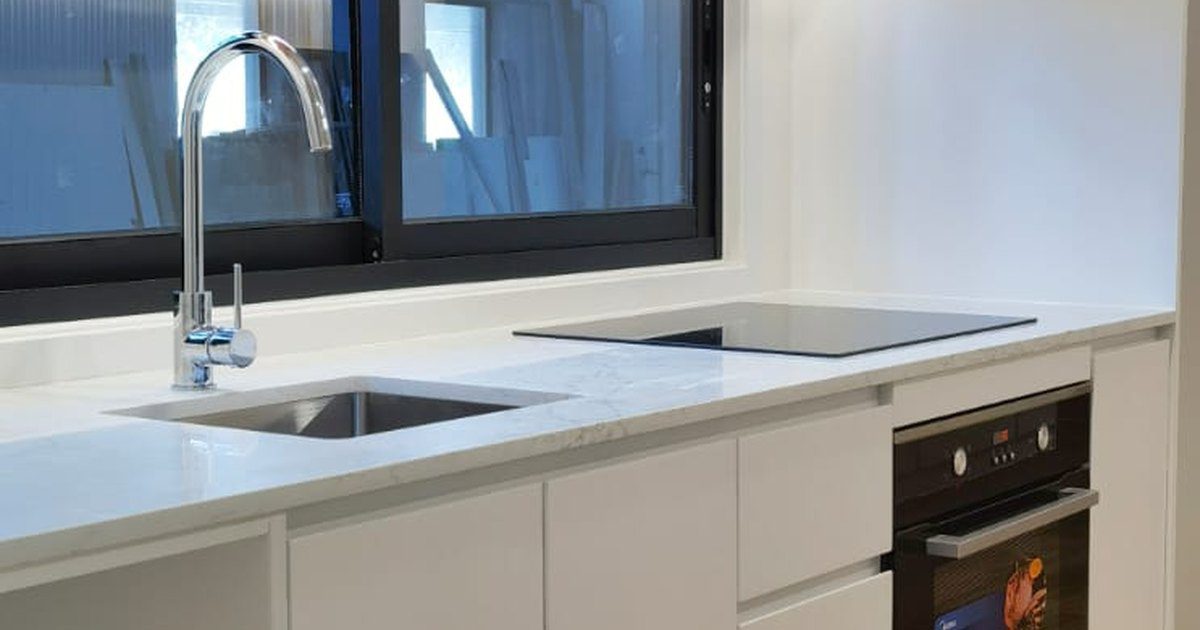
In the factory, each module is fitted out as a self-contained zone. Electrical circuits are run and terminated at a module boundary, plumbing is roughed in and fixtures are set, wet areas are waterproofed and tiled, and mechanical items such as exhaust fans and split-system heads are mounted. The module effectively leaves the line as a complete room or group of rooms with its services stubbed to the edge, ready to be linked.
On site, licensed trades make three kinds of connection. First, module to module, where the wiring, pipework and any ductwork crossing a module joint are joined and made good. Second, module to the building’s common services, such as the main switchboard, the water and sanitary stacks and any central plant. Third, the building to the site services, meaning the connection to mains power, water, sewer, gas and telecommunications. Our installation guide covers the site preparation and craning that precede this step, and our process overview shows where services coordination sits in the overall program.
Plumbing and drainage: AS/NZS 3500 and the Plumbing Code of Australia
Plumbing in a modular building is governed by the same rules as any Australian building. The Plumbing Code of Australia, which is Volume Three of the National Construction Code, sets the performance requirements, and the AS/NZS 3500 series covers the technical detail across water services, sanitary plumbing and drainage, stormwater and heated water. The work must be carried out and certified by a licensed or registered plumber in the relevant state, exactly as it would be on a site-built job.
The modular difference is in the joints. Cold and hot water lines, sanitary drainage stacks and vent pipes are designed to break at module boundaries, so the site plumber joins pre-set connection points rather than running full services from scratch. Careful coordination puts those joints in accessible locations, keeps falls on drainage lines correct across the module split and preserves backflow prevention and water metering. Wet areas are already waterproofed in the factory, and the membrane and tiling detail at the module junction is a known risk point that our wet-area waterproofing guide covers in detail. Once connected, water services are pressure tested and drainage is checked before the walls are closed up and signed off.
Electrical services: AS/NZS 3000 Wiring Rules
Electrical installation follows AS/NZS 3000:2018, the Australian and New Zealand Wiring Rules, and must be performed and certified by a licensed electrician. In a modular building, each module typically carries its own circuits terminated at a boundary, with sub-mains and inter-module cabling connected on site back to a main switchboard. Residual current devices, circuit protection, earthing and bonding all have to meet the Wiring Rules across the assembled building, not just within a single module.
The site electrician joins the module circuits, connects the switchboard and metering, and then carries out the mandatory tests, including insulation resistance, polarity, earth continuity and RCD operation. On completion the electrician issues the electrical safety certification required in the relevant state, such as a Certificate of Electrical Safety in Victoria, which becomes part of the compliance package the surveyor relies on. Because electrical loads tie directly into energy performance, the lighting, appliances and any air conditioning are also part of the building’s energy rating, which our energy efficiency and NatHERS guide explains.
Mechanical ventilation and air conditioning
Mechanical services cover ventilation, exhaust and air conditioning. The NCC sets ventilation requirements for each building class, and AS 1668.2:2024 is the current standard for mechanical ventilation in buildings, with AS/NZS 3666 applying to air-handling systems where microbial control matters. In residential and accommodation modules, this usually means bathroom and kitchen exhaust, make-up air and split-system air conditioning, with heads mounted in the factory and refrigerant and condensate lines connected on site. In larger Class 3 and Class 9b buildings, ductwork and central plant may cross module boundaries and need joining and balancing after installation.
Ventilation is also part of managing moisture. Good mechanical extraction works with the building fabric to control condensation in a sealed, well-insulated steel-framed building, a subject that overlaps with our guidance on energy and condensation. Mechanical systems are commissioned and balanced once connected, so the airflow and cooling actually delivered match what was designed.
Gas and other services
Where a module includes gas appliances, the gas installation is governed by AS/NZS 5601 and must be connected and certified by a licensed gasfitter, with the appliance and pipework tested before use. Telecommunications and data, fire services where required for the building class, and any solar or battery systems are connected on the same principle: pre-installed as far as practical in the factory, then joined and certified on site by the appropriate licensed trade.
Coordination around the module grid
The single biggest determinant of a smooth services connection is design coordination. Services have to be set out around the module grid so that every joint lands in an accessible, logical place and no run is trapped behind a fixed panel. This is a design decision made early, alongside the structural grid, not something resolved on site. Specifying a building for modular for the first time is where this coordination is won or lost, and our guide for architects sets out the module dimensions and connection logic that make services coordination straightforward.
Commissioning, testing and certification
Connection is only half the job. Every service is then commissioned, meaning it is tested and proven to work as designed. Water services are pressure tested, drainage is checked for falls and leaks, electrical circuits are tested and the safety certificate issued, and mechanical systems are balanced and commissioned. Each trade produces the compliance certificate its licence requires, and together those documents form the evidence a building surveyor needs during inspections and before an Occupancy Certificate can be issued. Our building permit and inspections guide explains how these certificates feed the surveyor’s process.
The applicable code depends on the state. NCC 2025 has been in force in Victoria since 1 May 2026, while New South Wales, Queensland and the ACT continue under NCC 2022 until 1 May 2027, with voluntary early adoption available in the meantime. The service standards referenced above apply either way, but the specific NCC edition and any state plumbing and electrical variations should be confirmed for the project location. This is one reason services are always connected and certified by trades licensed in the state where the building is assembled, and why the compliance approach follows the same evidence discipline set out in our NCC compliance guide and the wider principles of offsite construction in Australia.
Who is responsible for the services
Responsibility follows the licence. EcoPrestige supplies turnkey, fully pre-cladded steel-framed modular units with services pre-installed to the module boundary, compliant with NCC Class 1a, 2, 3 and 9b, from a 50,000 square metre in-house production facility. On site, the connection and certification of plumbing, electrical, mechanical and gas services are carried out by trades licensed in the relevant state. The licensed head contractor or registered building practitioner remains the builder of record and holds the building permit, and EcoPrestige supplies the engineered, pre-serviced modules into that scope.
How that is coordinated depends on the engagement. EcoPrestige offers three arrangements: modular supply only, supply plus EcoPrestige install, or design and construct coordination under AS 4300. Under a design and construct arrangement, the services coordination and the trade interfaces are managed as part of the package, which reduces the number of moving parts a builder has to hold together on site.
How EcoPrestige handles building services in modular construction
EcoPrestige units are engineered to Australian standards and manufactured in a dedicated offshore facility, with services roughed in, fixtures fitted and wet areas waterproofed before a module ships. Units are turnkey and fully pre-cladded, compliant with NCC Class 1a, 2, 3 and 9b, and carry a 12-year structural warranty and a 12-month materials warranty, with an Occupancy Certificate provided on completion. Because so much of the services work is completed in a controlled factory environment, the on-site connection is reduced to defined joints and commissioning, which is a large part of how modular delivery runs around 30% faster than typical modular suppliers. The result for a builder is fewer trades sequencing on a live site and a cleaner path to the certificates a surveyor needs.
Frequently asked questions
What building services are pre-installed in a modular unit before it leaves the factory?
Modules are fitted out in the factory with electrical circuits, plumbing pipework and fixtures, waterproofed and tiled wet areas, and mechanical items such as exhaust fans and split-system heads. The services are terminated at the module boundary so they can be joined on site, so the unit arrives as a near-complete room or group of rooms rather than a plug-and-play building.
Who connects and certifies the plumbing and electrical services on a modular building in Australia?
Trades licensed in the relevant state do the work. A licensed plumber connects and certifies the plumbing and drainage, and a licensed electrician connects, tests and certifies the electrical installation, issuing the safety certificate their licence requires. EcoPrestige supplies the pre-serviced modules; the site connection and certification sit with the head contractor’s licensed trades.
Which Australian standards govern building services in modular construction?
Plumbing follows the Plumbing Code of Australia, which is NCC Volume Three, and the AS/NZS 3500 series. Electrical work follows AS/NZS 3000:2018, the Wiring Rules. Mechanical ventilation follows AS 1668.2:2024 and the NCC ventilation provisions, with AS/NZS 3666 for air handling, and any gas installation follows AS/NZS 5601. These apply to modular buildings exactly as they do to site-built ones.
How are services commissioned and tested before occupancy?
Each service is proven after connection. Water services are pressure tested, drainage is checked, electrical circuits are tested for insulation, polarity, earthing and RCD operation, and mechanical systems are balanced and commissioned. Each trade issues its compliance certificate, and those documents form the evidence a building surveyor relies on during inspections and before an Occupancy Certificate is issued.
Who is the builder of record for the services on an EcoPrestige project?
The licensed head contractor or registered building practitioner is the builder of record and holds the building permit. EcoPrestige supplies the engineered, pre-serviced modules into that scope, with supply, supply plus install, or AS 4300 design and construct coordination available depending on how much of the on-site interface the builder wants EcoPrestige to manage.
Talk to EcoPrestige
To discuss the services scope and site connection plan for a specific project, request the builder pack or see the brochures. You can also call James on 0452 190 427 or email prebuilt@ecoprestige.com.au.
Services sign-off is only one part of the approval trail. Our evidence of suitability guide for modular buildings shows builders how the full NCC compliance file comes together for the surveyor.