
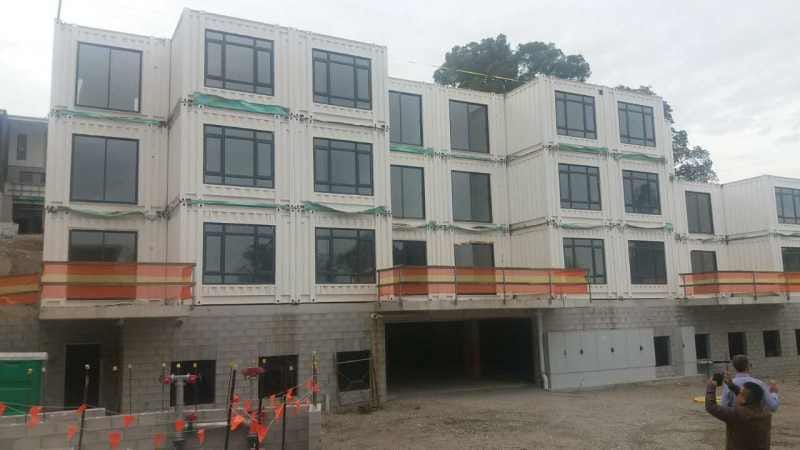
Energy efficient modular buildings are now a compliance question, not a marketing one. Under NCC 2022 the energy rules for new homes and apartments stepped up, and a lot of builders and developers are still working out what the changes mean for a factory-built project. This guide sets out what NCC 2022 asks for across residential and commercial classes, how the new 7-star NatHERS standard, the Whole-of-Home budget, Section J and the condensation rules fit together, and where steel-framed modular delivery helps or needs careful detailing. It is written for builders, developers and head contractors, not consumers.
The short version: energy performance is a whole-of-building outcome. The frame material does not set the rating on its own. Insulation, glazing, air-sealing and thermal-break detailing do the work, and factory production can lift the quality of that work if the design is right. Get the assessment done early, because the number that comes back shapes the wall build-up, the windows and the services.
What changed under NCC 2022 for homes and apartments
NCC 2022 raised the minimum thermal-performance standard for new Class 1 houses and Class 2 apartment sole-occupancy units to 7 stars under the Nationwide House Energy Rating Scheme (NatHERS), up from the previous 6-star minimum. NatHERS runs on a scale from 0 to 10 stars, so 7 stars means the building envelope needs less energy for heating and cooling than a 6-star shell across the same climate.
The bigger shift is the new Whole-of-Home annual energy-use budget. For the first time the code looks past the shell and assesses the fixed appliances as well: heating and cooling equipment, hot water, cooking, lighting, and any pool or spa pumps. A design has to meet both the 7-star fabric target and the Whole-of-Home energy budget. In practice that pushes teams toward efficient heat-pump hot water, efficient air conditioning and, on many projects, some on-site solar to bring the budget into line. The two new residential performance requirements sit in Volume Two as H6P1 for thermal performance and H6P2 for energy usage.
Section J: energy efficiency for Class 2 to 9 buildings
For apartment common areas and commercial classes, energy efficiency lives in Section J of NCC 2022 Volume One. Section J was reorganised into nine parts (J1 to J9), so many familiar clause numbers from NCC 2019 no longer apply and older reports do not cross-reference cleanly. The stringency uplift was smaller than the 2019 edition; the emphasis moved toward metering, monitoring and readiness for a lower-carbon grid.
The changes that matter most on a modular commercial or apartment job are the expanded energy-monitoring provisions in Part J9, and the readiness provisions for the future installation of solar photovoltaic and battery systems, which call for space and capacity in the main switchboard and labelled provision for those systems. Car parks in scope need to be made ready for future electric-vehicle charging, with distribution-board space, control capability and electrical capacity allowed for. The modelling pathway many designers used, JV3, was renamed J1V3 and kept its safeguard so a weak envelope cannot be offset without limit by efficient services. A Class 2 apartment building therefore carries two obligations at once: NatHERS and Whole-of-Home for each dwelling, and Section J for the common property and shared services.
Condensation management is now part of the energy picture
NCC 2022 strengthened condensation management, and it is easy to miss because it does not sit under the energy heading. The provisions are in Part F8 of Volume One and Part 10.8 of the Housing Provisions. Tighter, better-insulated buildings hold more moisture, so the code now manages where that moisture goes.
The practical requirements include vapour permeance rules for pliable building membranes that change with climate zone, wet-area and kitchen exhaust that generally has to discharge to outside air rather than into a roof space, and roof-space ventilation openings in climate zones 6, 7 and 8, with exceptions such as concrete roofs and buildings in a bushfire flame zone (BAL-FZ). The verification methods are built around a Mould Index that must not be exceeded. For a factory-built module this is a design decision made once and repeated accurately across every unit, which is one of the quieter advantages of prefabrication when the detailing is set correctly up front.
When the rules apply in your state
NCC 2022 became available for voluntary use from 1 October 2022, but each state and territory adopts on its own timetable, so the requirement on your site depends on where and when you build. Victoria and Queensland brought in the 7-star and Whole-of-Home requirements from 1 May 2024. New South Wales lifted new-home energy standards through an updated BASIX from October 2023. Western Australia took a staged path across 1 May 2024 and 1 May 2025. Adoption dates and transition arrangements differ elsewhere, so confirm the exact energy requirement that applies to your project with your building surveyor before you lock the design. This is current-regulation territory and it does move.
Where steel-framed modular helps, and where it needs care
Steel framing is strong, straight, dimensionally stable and non-combustible, which is why it suits craned, stacked modules. It is also thermally conductive, so a steel frame moves heat more readily than timber. That is not a reason to avoid steel; it is a reason to detail for it. Thermal bridging through the frame has to be managed with continuous insulation and thermal breaks so the built wall performs the way the energy model assumes. Handled at design stage, a steel-framed module reaches the required rating; ignored, it underperforms the drawings. Being honest about this is the point: the rating comes from the whole envelope, not the frame alone.
Factory production is where modular earns its keep on energy. EcoPrestige builds turnkey, fully pre-cladded modules in a 50,000 sqm in-house facility, so insulation, membranes, glazing and air-sealing go in under cover and under supervision rather than in the weather on a busy site. Consistent installation is exactly what NatHERS and the condensation provisions reward, because a rating relies on the wall actually being built the way it was drawn. This is how energy efficient modular buildings hit their modelled rating in the real world rather than on paper. The same controlled process is around 30 per cent faster than typical modular suppliers, and every unit carries a 12-year structural warranty and a 12-month materials warranty, with an Occupancy Certificate provided. The modules are built to the relevant NCC classes, including Class 1a, 2, 3 and 9b.
Getting the evidence right
Energy compliance is a documentation exercise as much as a build one. A NatHERS certificate for the dwellings, and a Section J assessment or J1V3 report for the commercial and common elements, form part of the evidence the building surveyor relies on to approve the work. EcoPrestige supplies the product and the supporting evidence for the modules; the energy assessor sets the target and the design, the surveyor approves against the code, and the head contractor remains the builder of record on the ground. Treat the energy assessment as an early input, not a late tick-box, because it drives the wall build-up, the window schedule and the services selection, and reworking those after fabrication is expensive. Our approach to compiling that documentation is covered in the evidence of suitability guide.
Energy sits inside a wider compliance stack
Energy is one layer of the NCC picture, and it interacts with the others. Better sealing for energy raises the importance of the condensation and ventilation detailing above. Acoustic separation between apartments follows its own path in the NCC F7 acoustic compliance guide, and fire resistance is set out in the fire-rated modular guide. Where the site carries a natural-hazard overlay, the same envelope has to answer the bushfire BAL and AS 3959 requirements or the flood hazard-area requirements, and those choices feed back into insulation, cladding and glazing. For the residential, buyer-facing view of energy performance, see our note on 7-star energy rating in modular homes.
Cost and delivery for energy efficient modular buildings
Meeting NCC 2022 energy targets adds cost to any build method through better glazing, insulation and services, so the sensible comparison is like for like against conventional construction, not modular against an out-of-date baseline. EcoPrestige pricing starts from A$2,200 per square metre for early learning centres, A$2,300 per square metre for apartments and A$3,300 per square metre for hotels, excluding GST, across the Orchid one-bedroom, Tulip two-bedroom and Acacia three-bedroom range. Three engagement models are available: modular supply only, supply plus EcoPrestige install, or a design-and-build coordinator role under AS 4300. Full specifications and imagery are in the brochures, and indicative rates are set out in the modular construction costs guide.
Five things to lock before you request a quote
Before you price an energy-compliant modular project, settle these five: the building classes involved and therefore whether you are in NatHERS, Section J, or both; the state and adoption date that fix the current requirement on your site; the NatHERS assessment and target for each dwelling type, done early; the Section J pathway for common and commercial elements, including whether you are using J1V3 modelling; and the condensation, ventilation and services strategy that follows from the sealed, insulated envelope. Bring those to the table and the quote is faster, the design does not get reworked after fabrication, and your energy efficient modular buildings clear certification without surprises.
Frequently asked questions
What energy rating do modular homes need under NCC 2022?
New Class 1 houses and Class 2 apartment sole-occupancy units need a minimum 7 stars under NatHERS, up from 6 stars, plus compliance with the separate Whole-of-Home annual energy-use budget. The star rating covers the building fabric, while Whole-of-Home covers the fixed appliances such as heating, cooling, hot water, cooking, lighting and pool or spa pumps.
What is the Whole-of-Home requirement?
Whole-of-Home is a new NCC 2022 measure that assesses the annual energy use of a home’s fixed systems, not just the shell. It accounts for heating and cooling, hot water, cooking, lighting and any pool or spa pumps, and it can be offset by efficient equipment and on-site solar. A design must meet both the 7-star fabric target and the Whole-of-Home budget.
Does Section J apply to modular apartment and commercial buildings?
Yes. Class 2 to 9 buildings, including apartment common areas and commercial modular buildings, comply with Section J of NCC 2022 Volume One. Section J was reorganised into parts J1 to J9 and adds expanded energy monitoring and readiness provisions for future solar, battery and electric-vehicle charging systems. The J1V3 modelling pathway, formerly JV3, remains available.
Is a steel frame a problem for energy efficiency?
No, provided thermal bridging is managed. Steel conducts heat, so a steel-framed wall needs continuous insulation and thermal breaks so the built wall performs the way the energy model assumes. The rating is a whole-envelope outcome that depends on insulation, glazing and air-sealing, not on the frame material alone. Detailed at design stage, steel-framed modules meet the required rating.
How does factory construction help with energy and condensation compliance?
A NatHERS rating relies on the wall being built the way it was drawn, and the condensation provisions rely on membranes, exhaust and ventilation being installed correctly. Building modules in a controlled 50,000 sqm factory means insulation, membranes, glazing and sealing go in under cover and under supervision, which supports consistent thermal and moisture performance compared with weather-exposed site work.
Get the Builder Pack
Download EcoPrestige’s pricing and scope guide for builders and developers, or speak with our team about compliance for your next modular project.