
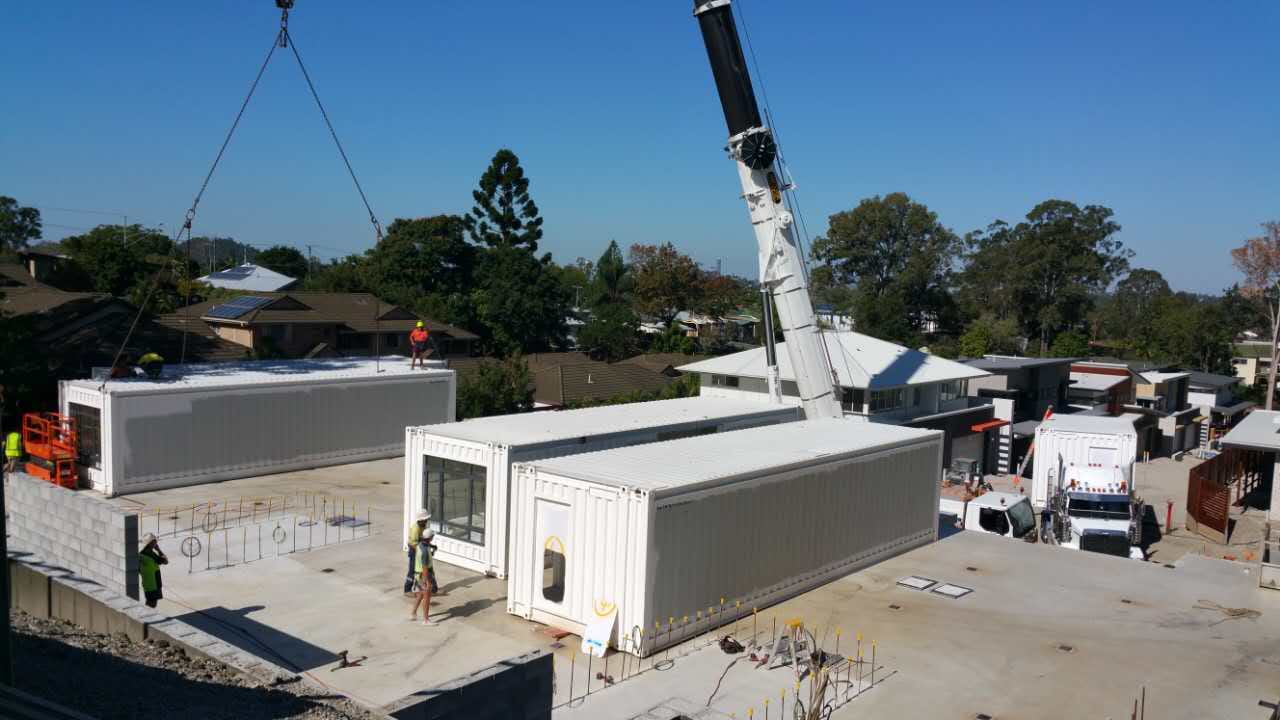
Importing modular buildings is now a core part of how many Australian builders and developers deliver on time. The module is engineered here, built offshore, then shipped, cleared and craned into place. That model can cut weeks off a programme. It also adds a layer most local-only builds never touch: customs clearance, import duty, GST at the border, biosecurity, and ocean freight risk.
This guide walks through what actually happens when a steel-framed module lands in Australia, who carries the risk, and how to build a true landed cost. It is written for builders, developers and head contractors buying imported or offshore-manufactured modular. It is general information, not legal, tax or customs advice. For a binding view on your shipment, use a licensed customs broker and your accountant.
Who is the importer of record
Before any number matters, one question decides where the risk sits: who is the importer of record. The importer of record lodges the customs entry, pays duty and GST, and carries responsibility for biosecurity compliance on that consignment. It is usually the party named as the consignee on the shipping documents.
Depending on the commercial terms, that can be the developer, the head contractor, or the supplier. It changes with the delivery term you agree. Under an ex-works or free-on-board term, the Australian buyer is the importer of record and manages clearance from the port. Under a delivered term, the supplier may clear the goods and hand them over on site. Neither is right or wrong. What matters is that the contract says so in writing, and that the party carrying the obligation understands it. This is the same builder-of-record question that decides who signs off the finished building, which we cover in our guide on who builds the Australian building when China builds the module.
Customs clearance and tariff classification
Every commercial import into Australia needs to be declared to the Australian Border Force. Goods with a customs value above A$1,000 require a formal Import Declaration, lodged through the Integrated Cargo System, before the goods can be released. Most importers use a licensed customs broker to lodge it, because classification and valuation errors are the importer’s liability, not the broker’s.
Classification is the first step. Prefabricated buildings fall under Harmonised System heading 9406, which covers complete or substantially complete buildings assembled from prefabricated components. Getting the tariff classification right sets the duty rate, the concession eligibility and the paperwork. A whole module and a container of loose components can classify differently, so this is worth confirming with your broker before the goods ship, not after they land.
Import duty and ChAFTA
The general customs duty rate that would otherwise apply to many building products is 5 per cent of the customs value. For goods that originate in China, the China-Australia Free Trade Agreement changes that picture. Under ChAFTA, tariffs on Chinese-origin goods were fully eliminated by 1 January 2019, so eligible goods now enter duty-free.
Duty-free is not automatic. To claim the zero rate you must show the goods meet the ChAFTA rules of origin and hold the right document: a Certificate of Origin issued by an authorised Chinese body, or a Declaration of Origin from the exporter. Without valid origin documentation, the general rate can apply and duty becomes payable. This is one of the most common and avoidable landed-cost surprises. Confirm the origin paperwork is in order before the vessel sails.
GST at the border
Duty is often zero. GST is not. Goods imported for home consumption are a taxable importation, and GST is charged at 10 per cent of the value of the taxable importation.
The value of the taxable importation is not just the price of the module. It is built from the customs value of the goods, plus any customs duty payable, plus the cost of international transport and insurance to bring the goods to Australia. So GST is calculated on the landed value, including freight and marine cover, not the factory price alone. On a large modular consignment that difference is material.
The offset is that a business registered for GST can generally claim that import GST back as an input tax credit, where the goods are used for a creditable purpose. It is a cash-flow cost at the border rather than a permanent one for most registered importers, but it still has to be funded when the goods clear. Deferring or financing that GST is a real line in the cash-flow plan, which connects directly to how the whole build is funded. We cover the payment and lender side in our guide to financing offshore modular construction.
Biosecurity and the stink bug season
Biosecurity is where import programmes most often lose time, and it is the part local builders least expect. The Department of Agriculture, Fisheries and Forestry regulates what can enter the country, and steel modules shipped from China sit squarely inside two active controls.
The first is the brown marmorated stink bug. Each year the department runs a seasonal measures programme, and the 2025-26 risk season applies to goods shipped between 1 September 2025 and 30 April 2026. China is listed as a source of target high risk goods that may be subject to increased inspection, and goods from target risk countries can require mandatory offshore treatment such as heat treatment or fumigation before they arrive. Treatment has to be done by an approved provider and certified, or the consignment can be held, treated on arrival at cost, or in the worst case re-exported.
The second is timber. Any timber packaging, bracing or dunnage travelling with the module must meet the international ISPM 15 standard for treated and marked wood packaging. Untreated timber is a frequent cause of holds and cleaning orders. The fix is simple and upstream: specify ISPM 15 compliant packaging in the supply contract, and require BMSB treatment certificates as a condition of shipment during the risk season.
Shipping, Incoterms and marine cover
The commercial term you agree, the Incoterm, sets who pays for freight and insurance and where risk passes from seller to buyer. It is worth being precise here, because the point where risk passes is not the same as the point where legal title passes, and it is not the same as who is the importer of record. Ocean transit from China to eastern Australian ports commonly runs in the order of four to six weeks, before port handling and clearance, and modules travel as oversized or out-of-gauge cargo that needs the right vessel and lashing.
Whatever term you use, insure the goods for their full value across the sea leg with marine cargo cover. A module damaged in transit is a programme problem and a cost problem, and standard supply terms rarely make the seller carry that risk once the goods are loaded. The finance guide linked above sets out how Incoterms, marine insurance and the risk-transfer point line up with progress payments.
Building a true landed cost
The factory price is the start of the number, not the number. A defensible landed cost for importing modular buildings adds international sea freight, marine insurance, any import duty, GST on the taxable importation, biosecurity treatment and inspection fees, customs brokerage, port and terminal handling, oversized-load road transport to site, and the crane and install scope once it arrives. Only when all of that is in one line can an imported module be compared fairly against a locally built alternative.
Done properly, the imported route still holds its advantage on speed and cost certainty for the right project. Done with only the factory price in the budget, it produces exactly the nasty surprise that makes people distrust offshore modular. The discipline is to model the whole chain before committing. Our modular construction cost guide and the offshore procurement risk playbook both walk through how to hold that number.
How EcoPrestige structures the import
EcoPrestige engineers to Australian standards and manufactures in a 50,000 square metre in-house facility offshore, with Australian engineering and quality oversight of that production. The modules arrive turnkey and fully pre-cladded, carry a 12-year structural warranty and a 12-month materials warranty, and are delivered to support an Occupancy Certificate, built to NCC Class 1a, 2, 3 and 9b as required.
How much of the import chain we carry depends on the offering. There are three: modular supply only, supply plus EcoPrestige install, or a design-and-build coordinator role to AS 4300. Under a supply-only arrangement the builder or developer is typically the importer of record and manages clearance, while under the coordinated offerings more of the freight, clearance and delivery sequence sits with us. In every case the licensed head contractor holds the building work, and the responsibility line is set out in the contract before anything ships. If you are weighing which structure fits your project, the commercial modular buildings guide and our warranty, defects and insurance guide are the right next reads.
Frequently asked questions
Do you pay import duty on modular buildings from China?
Often not. Prefabricated buildings classify under Harmonised System heading 9406, where a general rate of 5 per cent could otherwise apply. Under the China-Australia Free Trade Agreement, Chinese-origin goods have been duty-free since tariffs were fully eliminated on 1 January 2019, provided the goods meet the ChAFTA rules of origin and you hold a valid Certificate or Declaration of Origin. Without that documentation, duty can apply.
Is GST payable when importing a modular building?
Yes. Imported goods entered for home consumption are a taxable importation and GST is charged at 10 per cent of the value of the taxable importation, which is the customs value plus any duty plus international transport and insurance. A business registered for GST can generally claim that import GST back as an input tax credit where the goods are for a creditable purpose, so for most registered importers it is a cash-flow cost at the border rather than a permanent one.
What biosecurity rules apply to steel modules shipped from China?
Two main controls. Brown marmorated stink bug seasonal measures apply to goods shipped in the risk season, which for 2025-26 runs from 1 September 2025 to 30 April 2026, and can require certified offshore treatment for goods from target risk countries including China. Separately, any timber packaging or bracing must meet the ISPM 15 standard for treated wood packaging. Build both requirements into the supply contract so treatment is done and certified before the goods ship.
Who is the importer of record for an imported modular building?
It depends on the Incoterm you agree. Under ex-works or free-on-board terms the Australian buyer is usually the importer of record and manages customs clearance. Under a delivered term the supplier may clear the goods. The obligation should be named clearly in the contract, because the importer of record pays duty and GST and carries biosecurity responsibility for the consignment.
How long does an imported module take to arrive?
Ocean transit from China to eastern Australian ports commonly runs in the order of four to six weeks, before port handling, customs clearance, biosecurity, and oversized-load road transport to site. Transit varies with route, port congestion and the risk season, so it should be planned as a range, not a fixed date, and sequenced into the build programme early.