
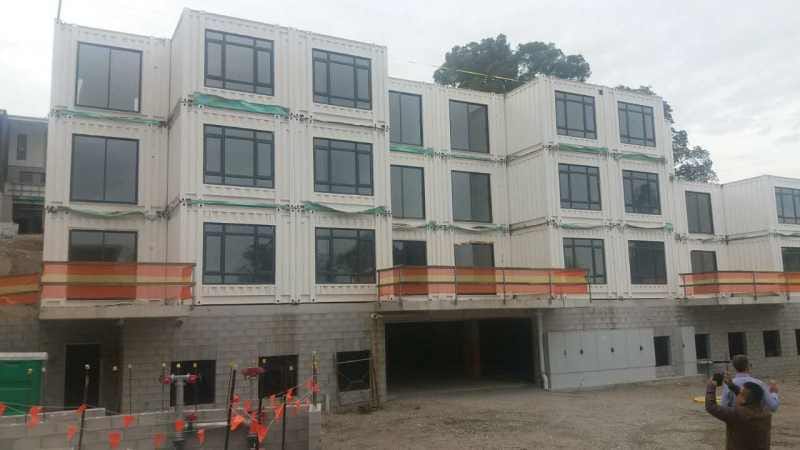
Compliance answers one question about a modular building: is it legal to occupy? Warranty, defect liability and insurance answer the question builders and developers actually lose sleep over: if something goes wrong in year three or year seven, who pays to fix it, and can that party still be reached? For an offshore-manufactured modular system the question has a sharper edge, because the factory that made the module sits in another country. This guide sets out how a modular building warranty, the statutory protections, defect liability and insurance actually work in Australia, and how a builder-facing supply model like EcoPrestige’s fits inside that risk chain.
A note on scope first. EcoPrestige supplies a structural steel modular system with Australian engineering and quality-assurance oversight. On most projects the head contractor is the builder of record who carries the statutory obligations to the owner, and the building surveyor signs off compliance. The protections below are the framework you design your contract and insurance around; they are not a substitute for advice from your own lawyer, broker or building surveyor on a specific project.
Why defect risk looks different for modular
The instinct that offshore modular is harder to stand behind is understandable, but it usually points at the wrong risk. The genuine differences are three. First, the party that physically built most of the structure is a factory, not the on-site crew, so the evidence trail has to travel with the module rather than living in a site diary. Second, a large share of the value is paid before the module lands on Australian soil, which changes how you stage and secure payments. Third, the finished building still has to be certified and occupied here under the National Construction Code, so an Australian surveyor and an Australian builder remain accountable regardless of where the steel was welded.
Handled well, those differences work in the builder’s favour. A factory line running to a fixed set of drawings produces a more consistent, better-documented product than a wet, weather-exposed site, and that documentation is exactly what you rely on when a defect claim or an insurance question arises years later. The task is to lock the evidence, the contract terms and the insurance in place up front, because they are far harder to retrofit after handover.
The three layers that protect a modular building
Protection against defects in Australia comes from three stacked layers: statutory warranties set by law, the defect liability period written into your building contract, and insurance. They cover different building classes and different time windows, and a well-structured modular project uses all three deliberately rather than assuming one covers everything. A modular building warranty from the supplier is one input to that stack, not the whole of it.
1. Statutory warranties for residential work
Where the building is residential, each state implies warranties into the contract by legislation, and they cannot be contracted out of. In New South Wales the Home Building Act 1989 implies warranties that the work is done with due care and skill, to plan and specification, and with suitable new materials. The warranty period runs six years for major (structural) defects and two years for other defects from completion. Home Building Compensation cover is required for residential building work priced above $20,000 including GST, and it responds where the builder has died, disappeared, become insolvent or failed to comply with a tribunal order.
Victoria works the same way through different instruments. The Domestic Building Contracts Act 1995 implies warranties under section 8 covering workmanship, materials, compliance with the law and suitability for occupation. Domestic Building Insurance is required where the contract price is more than $16,000, and it covers structural defects for six years and non-structural defects for two years, again as a last resort where the builder cannot be pursued. One trap to understand: under section 134 of the Building Act 1993 a building action can be brought for up to ten years from the issue of the occupancy permit, yet insurance cover expires well before that, so the years six to ten window relies on the builder still being solvent.
2. The defect liability period for commercial work
Most of what EcoPrestige supplies, being NCC Class 2 to 9 apartments, accommodation, education and commercial buildings, sits outside the residential warranty schemes. Here the protection is contractual. The building contract sets a defect liability period, commonly twelve months and sometimes twenty-four, during which the contractor must return and rectify defects that appear. That period is usually secured by retention or a bank guarantee, so there is money held back until the contractor has made good. Beyond the defect liability period, the owner still has contractual and common-law rights, and the ten-year building action longstop continues to apply in most states. The lesson is that on commercial modular the contract does the heavy lifting, so the defect liability period, the retention mechanism and the rectification obligations need to be drafted with the modular supply chain in mind.
3. The insurance layer
Insurance sits underneath both. During construction, contract works (also called construction all-risk) insurance covers physical loss or damage to the works, and for modular that policy needs to be read carefully so it responds to modules in transit and in temporary storage, not just once they are fixed to the slab. Public liability covers third-party injury and damage. Professional indemnity covers the design and certification parties for errors in their advice. For longer-term structural risk, latent (or inherent) defects insurance is an emerging option in Australia: a policy taken out at practical completion that responds to hidden structural defects for up to ten years without the owner having to prove fault. On a large or long-hold modular asset it is worth pricing, because it directly addresses the year six to ten gap that the statutory schemes leave open.
Who is actually liable across a modular supply chain
Confusion about liability usually comes from treating “the modular company” as a single accountable party. In practice responsibility is shared, and EcoPrestige’s three supply models make the split explicit. Under a supply-only arrangement, EcoPrestige provides the modules and the supporting documentation while the head contractor installs, connects and takes on the builder-of-record obligations to the owner. Under supply plus EcoPrestige installation, the installation scope shifts to EcoPrestige while site coordination and certification stay with the builder. Under the design-and-build coordinator model, structured to Australian Standard AS 4300, EcoPrestige coordinates the design-and-construct interface while the surveyor still certifies and the principal contractor still holds the head-contract warranties.
Across all three, the constant is that the Australian building surveyor certifies compliance and issues the occupancy documentation, and an Australian builder carries the statutory and contractual warranties to the owner. The supplier’s job is to make that chain defensible by supplying a product that is engineered, documented and warranted, so every party above it can meet its own obligations. Getting this mapped before contracts are signed is the single most useful thing a developer can do, and it is a core part of any serious procurement risk-control process for offshore-manufactured modular.
What EcoPrestige warrants, and the evidence behind it
EcoPrestige provides a twelve-year structural warranty on the modular system and a twelve-month warranty on materials. That structural cover is a product warranty on the steel modular structure itself; it sits alongside, not instead of, the statutory warranties and the contract defect liability period that the head contractor holds. The point of the supplier warranty is that the party who engineered and manufactured the structure stands behind the structural system for its design life, which is exactly the assurance an offshore model has to earn.
A warranty is only as good as the evidence that supports a claim, and this is where factory manufacture is an advantage rather than a liability. The modules are built to fixed engineering drawings under Australian quality-assurance oversight in a 50,000 square metre production facility, the units are turnkey and fully pre-cladded, and each project is delivered with the documentation a surveyor needs to issue an Occupancy Certificate. Because the structure is NCC Class 1a, 2, 3 and 9b capable, the evidence of suitability travels with the building rather than being reconstructed after the fact. For how that evidence chain is assembled and accepted, our guide to evidence of suitability under the NCC sets out the detail, and the corrosion protection guide shows how durability is designed in for the coastal and high-humidity sites where structural warranties matter most.
How to protect an offshore modular project
The practical work happens before the first module is cast. Stage payments against verifiable milestones rather than a calendar, so money follows progress you can see, and hold a retention or bank guarantee through the defect liability period so there is leverage if rectification is needed. Build quality-assurance hold points into the factory programme, with inspection and sign-off at framing, cladding and pre-dispatch, and require the inspection records, test certificates and as-built documentation to be handed over as a condition of each payment. Confirm that the contract works policy responds to modules in transit and storage, not only once installed. Name the warranty terms, the defect liability period, the retention and the documentation deliverables in the contract itself rather than leaving them to a purchase order. And map the responsibility split across supplier, installer, builder and surveyor for your specific delivery model before signing.
None of this is unique to modular; it is ordinary construction risk management applied with an eye to where the value is created. The difference with a documented factory product is that most of the evidence you will ever need is generated as a matter of course, provided you ask for it and tie it to your payments. For a wider view of vetting the party you are buying from, our seven-check gate for evaluating a modular supplier covers the financial, engineering and warranty questions worth asking, and the modular construction cost guide shows how retention and staged payments sit inside a typical budget. If you want to compare the underlying structural systems, the steel-frame versus timber-frame comparison is a useful companion.
Frequently asked questions
Does a warranty on an imported modular building mean anything if the factory is overseas?
Yes, provided the chain is structured correctly. The warranty that matters to the owner is held by the Australian builder of record and the statutory or contractual protections attached to the contract signed here. The supplier’s product warranty, such as EcoPrestige’s twelve-year structural warranty, sits behind that and is backed by the engineering and quality-assurance documentation generated during manufacture. The location of the factory does not remove the Australian builder’s and surveyor’s accountability.
Do statutory home warranties apply to modular apartments and commercial buildings?
The residential warranty schemes, Home Building Compensation in New South Wales and Domestic Building Insurance in Victoria, apply to residential building work above the state threshold, $20,000 in New South Wales and $16,000 in Victoria. Class 2 to 9 apartments, accommodation and commercial buildings are generally protected by the contract instead, through the defect liability period, retention and insurance, rather than by the residential schemes.
What is a defect liability period and how long is it?
The defect liability period is the window written into a building contract during which the contractor must return and rectify defects that appear after practical completion. It is commonly twelve months and sometimes twenty-four, and it is usually secured by retention or a bank guarantee so funds are held back until rectification is complete. It runs alongside, not instead of, any statutory warranties and the ten-year building action longstop.
How long can a defect claim be brought in Australia?
In most states a building action can be brought for up to ten years from the issue of the occupancy permit or equivalent. Statutory warranty periods are shorter, typically six years for major or structural defects and two years for others, and residential insurance cover generally expires within those shorter periods. That leaves a gap in the later years that relies on the builder remaining solvent, which is why latent defects insurance is worth pricing on long-hold assets.
What should be in a modular contract to protect against defects?
Name the supplier product warranty and its term, the defect liability period, and the retention or bank guarantee that secures it. Tie staged payments to verifiable factory milestones and make the inspection records, test certificates and as-built documentation a condition of payment. Confirm the contract works policy covers modules in transit and storage. Finally, set out the responsibility split between supplier, installer, head contractor and building surveyor for your specific delivery model.
Talk to EcoPrestige
EcoPrestige supplies engineered, documented and warranted steel modular systems that let builders and developers meet their own warranty and compliance obligations with confidence. To see the range and the specifications, view our brochures, or contact us to discuss how the warranty, documentation and delivery model would work on your project.
Thinking about importing modules direct? Read China builds the module, who builds the Australian building before you commit.