
Sustainable modular construction is moving from a marketing line to a measured, rated and increasingly tendered requirement. In 2026, Australian builders and developers are being asked to prove carbon and waste performance, not just claim it. Government building panels, institutional investors and lenders now want numbers. That shift changes how a modular building should be specified, and it is where offsite steel construction can earn its place if it is designed and sourced well.
This guide explains what sustainable modular construction actually means, how embodied carbon is now rated in Australia through NABERS and Green Star, where modular genuinely helps, and where it does not help by default. It is written for builders, head contractors, developers and their designers who need to make defensible decisions rather than repeat green slogans.
Operational carbon versus embodied carbon
Two different carbon stories sit inside every building, and they are often confused.
Operational carbon is the energy a building uses once it is occupied: heating, cooling, hot water, lighting and appliances. In Australia this is governed for homes by the National Construction Code 2022 energy provisions, which lifted new dwellings to a 7 star NatHERS standard plus a whole of home energy budget. We cover that side in detail in our guide to energy efficient modular buildings and NCC 2022 compliance.
Embodied carbon, sometimes called upfront carbon, is different. It is the emissions locked into the materials and the act of building: extracting raw materials, manufacturing steel and other products, transport and site works. In lifecycle terms these are the A1 to A5 stages. Whole of life carbon adds embodied and operational together across the life of the asset, plus end of life.
For years the industry only regulated the operational side. That is now changing, because as buildings get more energy efficient in use, the embodied share of total emissions grows. Sustainable modular construction has to answer both questions.
Embodied carbon is now rated in Australia
The reason this matters for a 2026 project is that embodied carbon is no longer just a theory. Australia now has tools that put a number and a rating against it, and those tools are starting to appear in procurement.
NABERS Embodied Carbon. Launched in late 2024, this is Australia’s first embodied carbon rating. It is a voluntary tool that measures the upfront carbon emissions of construction materials used in new buildings and partial rebuilds, and lets a project compare itself against similar buildings. It is expected to feature more heavily as the National Construction Code moves toward addressing embodied carbon for commercial buildings.
Green Star Buildings. The Green Building Council of Australia unveiled Green Star Buildings v1.1 on 21 October 2025. It strengthens the Climate Positive Pathway, sharpens the focus on upfront carbon, and adds a Design for Circularity credit that rewards adaptable, reusable material choices from day one. From 2028, projects chasing a 6 Star rating will also need to show a net gain in biodiversity. New projects are moving to register under v1.1 from 1 May 2026. Green Star ratings run from 4 to 6 Star, representing progressively higher performance from strong practice through Australian excellence to global leadership, so a Green Star target on a tender is a real design constraint, not a badge.
The practical takeaway is simple. If a developer or a government panel asks for a NABERS Embodied Carbon rating or a Green Star outcome, the modular supplier has to be able to hand over material data, not just a compliant building. That is a documentation task as much as a manufacturing one.
Where modular construction genuinely helps
Modular and offsite methods can support sustainability in several concrete ways, and it is worth being precise about them.
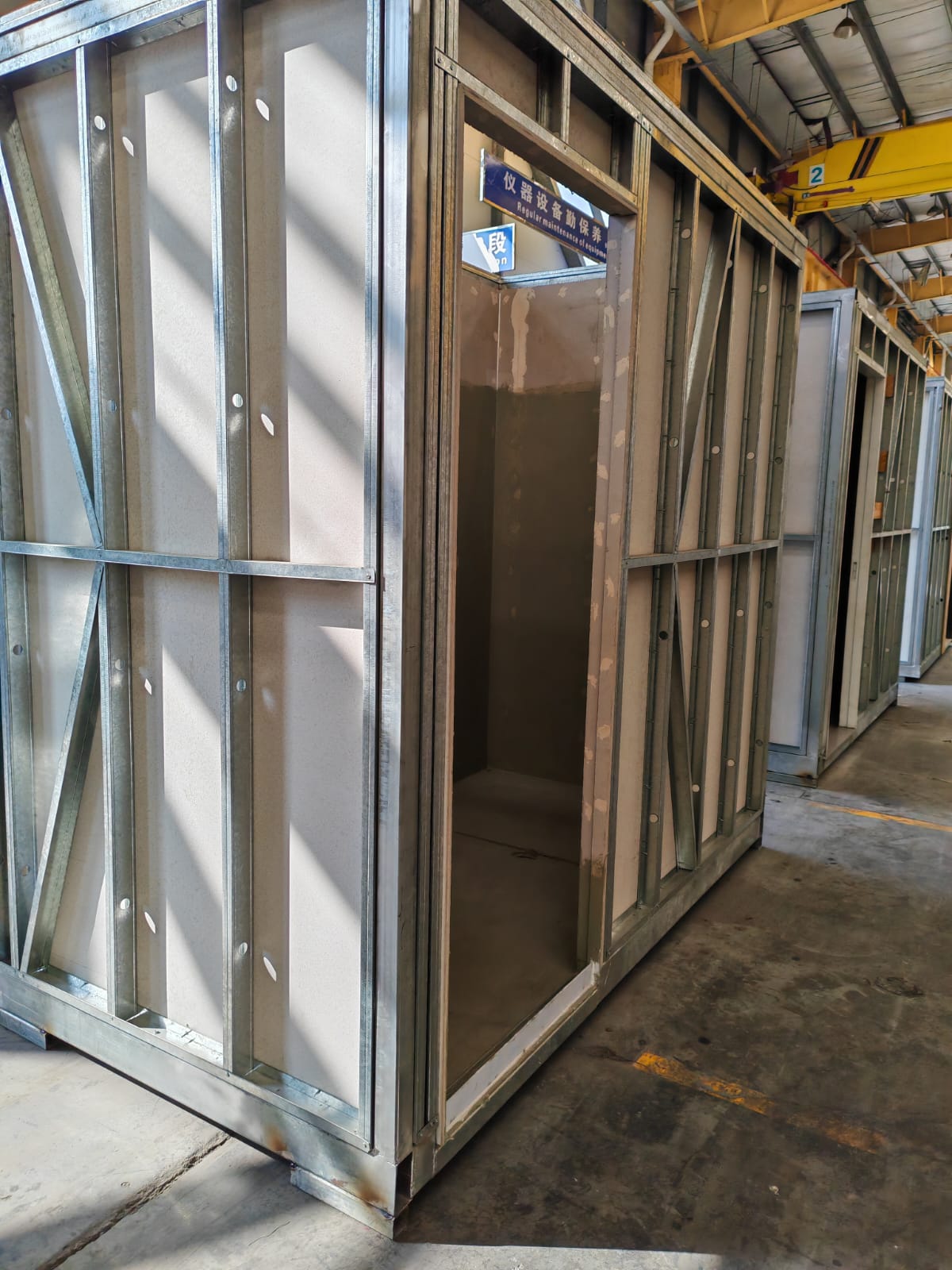
Less construction waste. Construction and demolition waste is the single largest waste stream in the country. The National Waste and Resource Recovery Report 2024 records 29.2 million tonnes of construction and demolition waste in 2022 to 2023, about 39 per cent of Australia’s total 75.6 million tonnes. A controlled factory environment allows precise cutting, bulk material planning and offcut recovery that a muddy, weather exposed site struggles to match. Building most of the structure indoors is one of the clearest waste arguments for offsite construction in Australia.
Recyclable steel and design for disassembly. Steel is one of the most recovered materials in the country, with metals reaching around a 90 per cent recovery rate nationally. A steel framed module is bolted and connected in ways that can be adapted, relocated or eventually dismantled, which aligns with the circular economy thinking now baked into Green Star. Steel’s durability also supports a long service life, which we explain in our guide to corrosion protection for steel framed modular buildings.
Better envelope quality. A factory line can install insulation, seal junctions and check the building envelope under cover and under inspection. A tighter, better built envelope reduces the operational energy the building needs for its whole life, which feeds straight back into the operational carbon story.
A shorter, tidier site programme. EcoPrestige modules arrive turnkey and fully pre-cladded, and the method is around 30 per cent faster than typical modular suppliers. Less time on site means fewer deliveries, less site disturbance and a shorter window of site based emissions and disruption to neighbours. Our modular delivery process sets out how that sequence works.
The honest trade-offs
Sustainable modular construction is a method, not an automatic green outcome. A modular building can have a poor carbon result if it is designed and sourced badly, so the responsible position is to name the trade-offs.
Steel carries meaningful embodied carbon per tonne unless recycled content or lower carbon steel is specified. The environmental case for a steel module improves sharply when the steel supply is chosen with embodied carbon in mind, and weakens when it is not.
Transport also counts. Modules are large and have to be freighted to site, and for offshore manufactured units there is sea freight to Australia as well. Sea freight is relatively efficient per tonne kilometre, but it is not zero, and it belongs in an honest embodied carbon assessment rather than being ignored.
Finally, a rating is earned through evidence. NABERS Embodied Carbon and Green Star both rely on material data, environmental product declarations and documented choices. A modular supplier that cannot produce that evidence cannot support the rating, however good the building looks. This is why sustainability on a modular project is a specification and paperwork discipline, not just a manufacturing one.
How to specify lower-carbon modular
Builders and developers who want a defensible sustainability outcome can steer it at the front end. Ask the supplier for environmental product declarations on major materials, and ask what recycled content is available in the steel and other products. Confirm how the factory documents material quantities so the data can feed a NABERS Embodied Carbon calculation or a Green Star submission. Set the insulation and envelope specification to the operational target early, so the two carbon stories are handled together. And compare options on a whole of life basis, not only on the capital cost per square metre, because the lowest priced frame today can be the most expensive building over thirty years. Designers weighing these choices may find our modular construction guide for architects a useful starting point.
How EcoPrestige fits
EcoPrestige supplies turnkey, fully pre-cladded steel framed modular units engineered to the National Construction Code across Class 1a, 2, 3 and 9b, with an Occupancy Certificate provided on completed builds. The units are backed by a 12 year structural warranty and a 12 month materials warranty, and are produced across a 50,000 square metre facility. Indicative pricing starts from A$2,200 per square metre for residential and early learning work and A$2,300 per square metre for apartments, excluding GST. The product range spans the Orchid one bedroom at 42 square metres, the Tulip two bedroom at 59 square metres and the Acacia three bedroom at 84 square metres.
There are three ways to engage: modular supply only, supply plus EcoPrestige installation, or a design and build coordinator arrangement under AS 4300. In every case EcoPrestige supplies into the licensed head contractor’s scope. The head contractor or registered building practitioner remains the builder of record and holds the statutory building responsibilities, including the sustainability and compliance evidence for the completed building. This split matters for large residential and institutional work such as modular build to rent developments, where the investor’s ESG requirements flow through the head contract.
If you are scoping a project with a NABERS Embodied Carbon or Green Star expectation, the useful next step is to line up the material and specification detail early. Our builder pack and product brochures set out the specifications, warranties and offerings you would need to test a modular option against your sustainability target.
Frequently asked questions
Is modular construction automatically more sustainable than site built?
No. Modular can reduce construction waste and improve envelope quality, but its carbon result depends on the materials specified, the design and the transport involved. It is a method that supports sustainability when it is designed and sourced well, not an automatic green outcome.
What is the difference between embodied carbon and operational carbon?
Operational carbon is the energy a building uses in service, such as heating, cooling and lighting, and is governed for homes by the NCC 2022 7 star NatHERS provisions. Embodied or upfront carbon is the emissions from making the materials and constructing the building. Whole of life carbon combines both across the building’s life.
How is embodied carbon rated in Australia?
NABERS launched Australia’s first embodied carbon rating in late 2024, measuring the upfront carbon of materials in new buildings and partial rebuilds. Green Star Buildings v1.1, unveiled in October 2025, also targets upfront carbon and adds a Design for Circularity credit. Both rely on material data and environmental product declarations.
Does steel framing help or hurt a building’s carbon footprint?
Both, depending on choices. Steel carries embodied carbon per tonne, so specifying recycled content or lower carbon steel matters. On the other side, steel is highly recyclable, with metals recovered at around 90 per cent nationally, and steel modules can be adapted or dismantled, which supports circular economy goals.
Who is responsible for sustainability compliance on a modular project?
The licensed head contractor or registered building practitioner is the builder of record and holds the statutory responsibilities, including sustainability and compliance evidence for the finished building. A modular supplier such as EcoPrestige supplies into that head contractor’s scope and provides the material and specification data needed to support a rating.