
Australia’s aged care sector is operating under structural undersupply and is now being reshaped by the Aged Care Act reforms and revised funding architecture. Operators with existing facilities are extending; new entrants are building. Across the country, the binding constraint on capacity growth is delivery speed. Conventional construction cannot match the operator timeline that current AACQS funding cycles allow.
Where modular fits in the aged-care delivery model
Greenfield independent-living unit clusters on existing aged-care campuses.
Residential aged-care wings (Class 9c / 3) on operator-controlled land.
Supported residential services (SRS) and disability-supported accommodation interfaces.
Staff-quarters and on-site workforce accommodation supporting regional aged-care operations.
Compliance — Class 9c is the gate
NCC Class 9c (residential care building) is the gate for aged-care residential accommodation.
EcoPrestige supplies evidence-of-suitability documentation covering structural, fire, acoustic, energy, accessibility (AS 1428.1).
7-star NCC 2022 thermal performance engineered-in.
BAL-12.5 to BAL-29 detailing for bushfire-prone sites.
Programme — what aged-care operators actually get
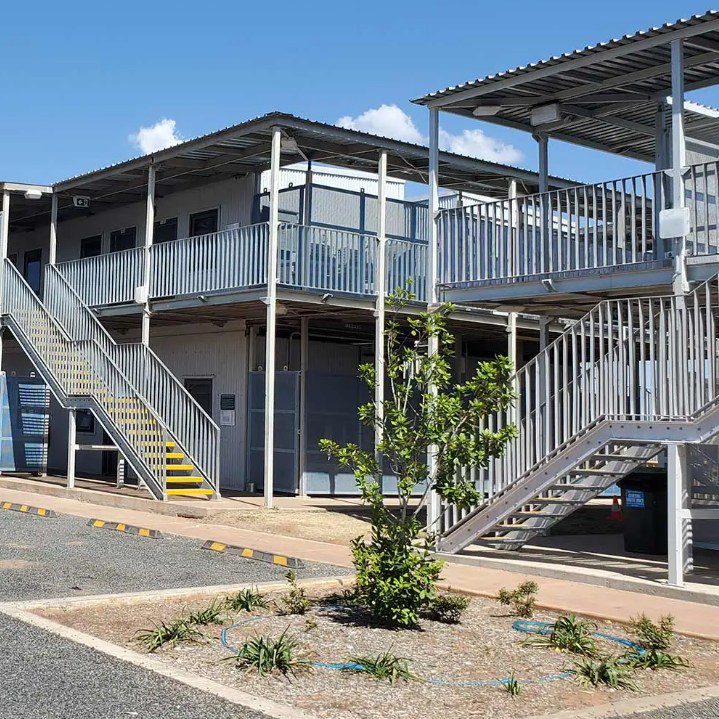
Pre-cladded, pre-fitted modules arrive crane-set ready. Ensuites, kitchenettes, HVAC, power infrastructure, acoustic treatment all integrated at the factory.
30% faster than typical modular suppliers — EcoPrestige’s 50,000 sqm offshore production runs while site civils and slabs complete in parallel.
Three procurement routes: Modular Supply | Supply + EP install coordination | D&B coordinator under AS4300.
Cost discipline for operator capital cycles
Module range: Orchid (1BR 42m²), Tulip (2BR 59m²), Acacia (3BR 84m²) — Acacia and Tulip are the most-specified ILU types.
Modular supply pricing from $2,200/m² (excl GST) baseline; Class 9c residential-care detailing applies a small uplift.
Operator yield: cost certainty against the regulated revenue stream is disproportionately valuable when operator capital cycles are constrained.
Frequently Asked Questions
Are EcoPrestige modules certifiable as aged-care residential (Class 9c)?
Yes. Modules are designed to NCC Class 9c with appropriate fire, acoustic and accessibility detailing. Evidence-of-suitability documentation is supplied for assessment by registered building surveyors.
Can EcoPrestige supply independent-living unit clusters?
Yes. Acacia (3BR 84m²) and Tulip (2BR 59m²) configurations are routinely specified for ILU and supported-living typologies.
Does EcoPrestige supply staff-quarters for regional aged-care campuses?
Yes. Workforce-grade modular accommodation can be supplied alongside resident-facing aged-care modules on the same campus.
How does compliance documentation work for aged-care projects?
EcoPrestige provides a documented evidence-of-suitability package covering structural, fire, acoustic, energy and accessibility — supplied for surveyor assessment under the standard certification process.
Does EcoPrestige act as the builder?
No. EcoPrestige supplies modules to aged-care builders and developers. Supply, supply+install and D&B coordinator under AS4300 options are available.
What lead time should aged-care operators plan to?
Lead time is project-specific. EcoPrestige’s offshore production keeps capacity available where domestic prefab queues are full. Detail is locked at contract.
Talk to EcoPrestige
EcoPrestige supplies builder-facing modular systems — Australian engineering + QA oversight, offshore manufacturing, NCC Class 1a / 2 / 3 / 9b compliant. Speak to our team about a current project.
Related: Modular retirement villages independent-living units · Modular childcare construction cost per m² · EcoPrestige process and QA · Modular vs traditional construction