
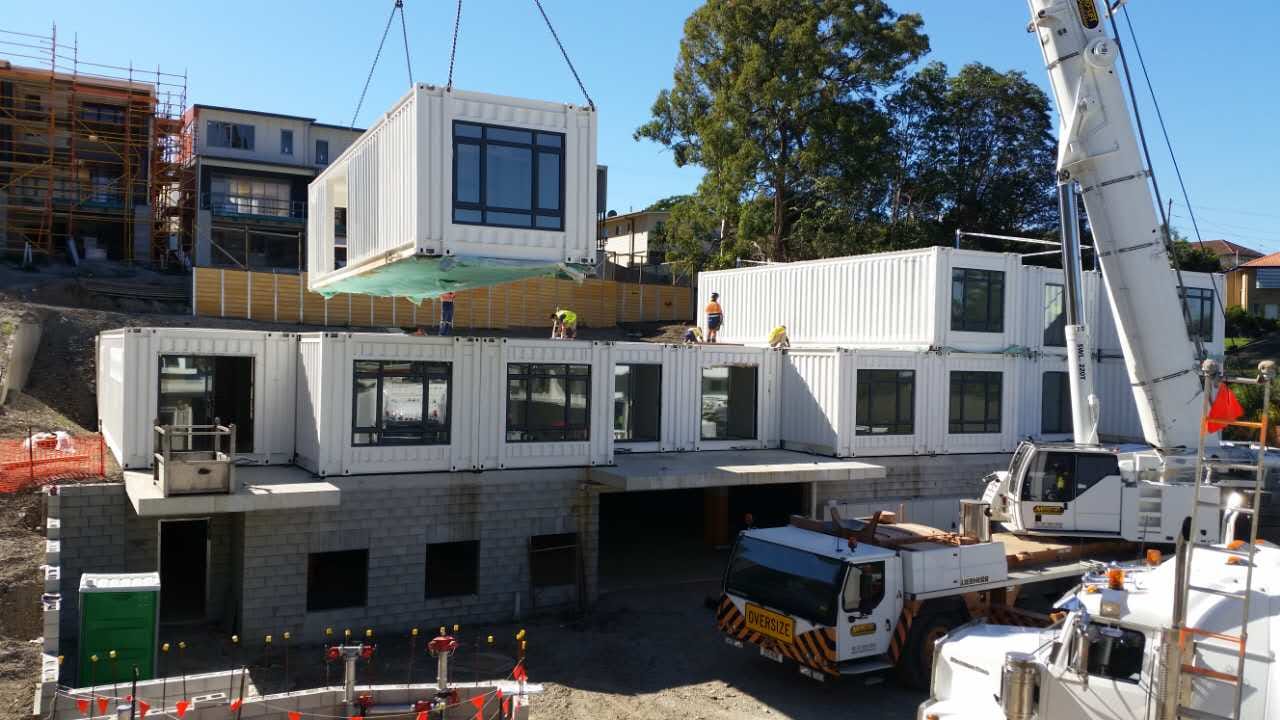
Every builder weighing modular asks the same first question. Does it actually cost less than building on site, or does the saving disappear once you add transport and craneage? Here is the honest comparison, where modular wins, and where site-built still wins.
Where modular wins on cost
Time is money and modular buys time. Factory production runs in parallel with site works. Footings and services go in while the modules are being built offshore. That overlap removes weeks or months of holding cost, finance interest and preliminaries from the program.
Weather does not stop a factory. Rain days, wet trades waiting and re-work from exposure all cost money on a traditional site. Controlled production removes most of that risk.
Labour is predictable. A controlled facility does not carry the trade-shortage premium and daily variability of a site build. Cost certainty is often worth more to a developer than the headline rate.
Where site-built still wins
Modular is not the answer to everything. Highly bespoke architecture with no repeatable module, tight infill sites with no crane access, and very small single jobs where the transport cost cannot be spread all favour a traditional build. An honest supplier tells you when your job is one of these.
The real comparison
Speed to revenue, cost certainty and weather risk favour modular. Design freedom on a constrained site and very low-volume one-offs favour site-built. Compliance is equal when the modular supplier carries Australian NCC compliance and engineering. That last point decides whether the saving is real.
The trap that erases the saving
The modular cost advantage is real only if you are not quietly taking on the engineering, compliance and rectification work yourself. If you import a module direct and then pay for Australian sign off, site adaptation and the fix when something is wrong, the gap closes fast. Read who carries that risk in China builds the module, who builds the Australian building.
EcoPrestige supplies builder-facing modular with the Australian layer inside the price. You get the cost advantage without inheriting the risk.
Download our technical brochures and indicative cost bands.
Next step for builders and developers
Get the EcoPrestige builder pack for module specs, scope split and indicative supply pricing: Get the builder pack
Have a live project? Email info@ecoprestige.com.au with your drawings or site details and we will come back with a supply scope.