
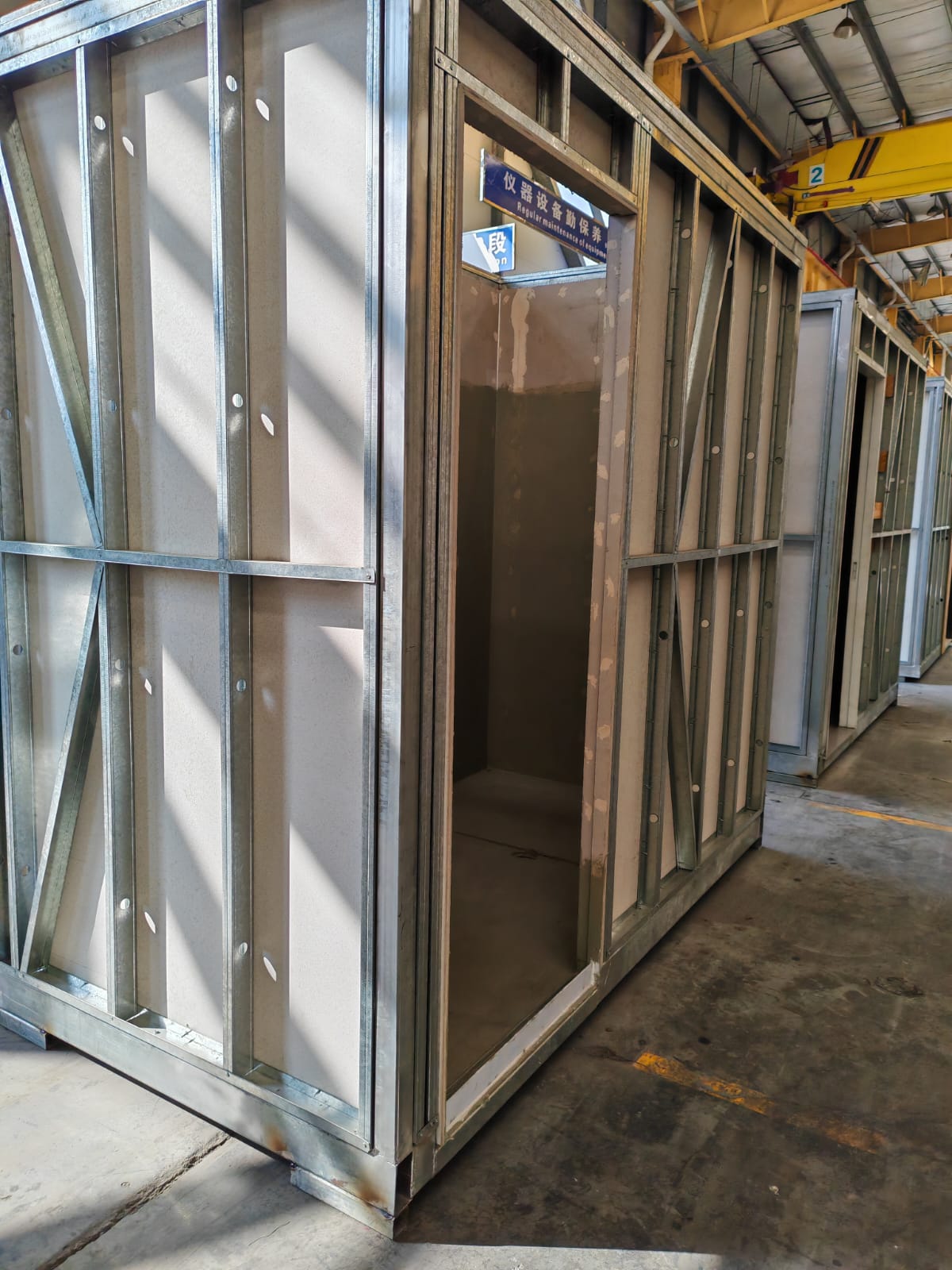
In May 2026 the New South Wales Government introduced the Building (Approvals and Practitioners) Bill 2026, the first legislation in Australia to formally define prefabricated buildings and bring Modern Methods of Construction into the building approvals system. At the time of writing the Bill has been introduced to Parliament but has not yet passed, so nothing here is settled law. For builders and suppliers working NSW projects, that distinction matters: this is the moment to prepare, before the framework is finalised, not after. This post walks through what the Bill proposes, what it would change in the paperwork you submit and the records you keep, and three actions worth taking this quarter.
The reform in one paragraph
The Bill consolidates a fragmented set of building rules into a single Act, defines prefabricated buildings as a recognised class, integrates MMC into the approvals pathway, introduces consumer protections for prefabricated home buyers, and creates a system of staged approvals so construction can begin on early stages while later stages are still in design. The NSW Government has pointed to savings of roughly A$330,000 per apartment block from removing duplicative design requirements, and the Commonwealth Productivity Commission has estimated that MMC can cut costs by up to 20 per cent and build up to 50 per cent faster than traditional methods. If passed, NSW would be first to the post nationally, and other states typically follow a lead like this.
Practical shift one: the certification chain
The most important change for a modular supplier is that a legal definition of prefabricated buildings opens the door to factory-side certification being recognised alongside site inspection. Today, a certifier’s frame of reference is built around work inspected on site. A recognised prefab class lets the paperwork acknowledge that structural and compliance work was completed and certified in a factory before the module arrived. For builders, that means the evidence you carry into certification shifts upstream, toward factory records, and the supplier who can produce those records cleanly becomes easier to certify.
Practical shift two: the factory audit trail
A recognised prefab class also implies that regulators and certifiers will look at factory records, not only site paperwork. That raises the bar on what a supplier must be able to show: module-level quality records, dimensional and weld checks, and traceable sign-offs against the approved design. This is exactly the kind of evidence a serious supplier should already hold. EcoPrestige modules are fabricated offshore under Australian engineering, Australian QA and Australian NCC compliance oversight, which means the factory audit trail a NSW certifier would ask for is generated as part of the build, not reconstructed afterwards.
Practical shift three: consumer protection and liability
The Bill introduces consumer protections for prefabricated home buyers, and independent commentary has flagged that MMC changes how risk and liability sit across the supply chain. For head contractors, the practical read is that product-liability and defect language will need to account for a factory-side manufacturing window as well as the site build. A clean scope split, where the supplier is clearly responsible for the module and the builder is clearly responsible for the site, is the simplest way to keep that liability boundary legible under the new frame.
Practical shift four: staged approvals and programme
Staged approvals are the sleeper feature. Allowing construction to begin on early stages while later stages are still in design maps almost perfectly onto how modular already works: civil and site works run on site while modules are still in factory production. A framework that formally recognises that concurrency removes a source of approval friction and protects the programme advantage that makes modular worth doing. For a builder, that is the difference between the paperwork fighting the build sequence and the paperwork matching it.
Where EcoPrestige fits the new frame
EcoPrestige’s builder-facing model matches the proposed framework without adjustment. EcoPrestige supplies the structural modules, external cladding, glazing, full fitout, compliance documentation, structural warranty and Occupancy Certificate at handover. The builder holds the head contract and the site scope: footings, civil works, service connections, cranage, bolt-down install and site management. EcoPrestige coordinates the install interface but does not carry install responsibility. Because the factory-controlled scope is documented and certified as it is built, a NSW head contractor bidding under the new rules inherits the audit trail rather than having to assemble it. See our Evidence of Suitability guide for the compliance pack, the modular for builders overview for the scope model, the delivery timeline guide for programme, and our NSW modular and NSW social housing MMC pages for state context.
Three actions for this quarter
First, audit your prefab suppliers now for factory-side evidence: if a supplier cannot produce module-level QA records and NCC compliance documentation on request, that is a gap to close before the framework lands. Second, review your product-liability and defect language for how it handles a factory manufacturing window separate from the site build. Third, map which of your NSW pipeline projects would benefit from staged approvals, so you are ready to use the pathway the day it is available. None of this requires the Bill to have passed; all of it is cheaper to do before it does.
Why builders outside NSW should read this too
Even if your current pipeline is in Victoria, Queensland or Western Australia, the NSW Bill is worth tracking, because building regulation tends to converge. When one state defines a class and proves the approvals model works, procurement bodies and regulators elsewhere borrow the language. Suppliers who already hold factory-side compliance evidence, and builders who already run a clean supply-versus-site scope split, will not need to change how they work as that convergence happens. The work of getting audit-ready is the same regardless of which jurisdiction moves first, so preparing now pays off across every state you build in.
Frequently asked questions
Is the NSW MMC reform now law?
No. The Building (Approvals and Practitioners) Bill 2026 was introduced to the NSW Parliament in May 2026 but has not yet passed at the time of writing. It sets out a proposed framework, so builders should prepare for it rather than treat it as settled law.
What does the Bill actually do?
It consolidates fragmented building rules into a single Act, defines prefabricated buildings as a recognised class, integrates MMC into building approvals, introduces consumer protections for prefab home buyers, and creates staged approvals so construction can begin on early stages while later stages are still in design.
Why does it matter that NSW is first?
NSW would be the first Australian jurisdiction to formally recognise MMC in legislation. State reforms like this often set a template other jurisdictions follow, so suppliers and builders who align early are positioned ahead of a national shift.
What changes for modular suppliers specifically?
A legal prefab definition opens the door to factory-side certification being recognised alongside site inspection, and raises the bar on the factory audit trail a supplier must produce: module-level QA records, dimensional and weld checks, and traceable sign-offs against the approved design.
How much could MMC save under the reform?
The NSW Government has cited savings of roughly A$330,000 per apartment block from removing duplicative design requirements, and the Commonwealth Productivity Commission has estimated MMC can cut costs by up to 20 per cent and build up to 50 per cent faster than traditional methods.
Does EcoPrestige’s model fit the new rules?
Yes. EcoPrestige modules are fabricated offshore under Australian engineering, Australian QA and Australian NCC compliance oversight, so the factory audit trail a NSW certifier would ask for is generated during the build. The builder holds the head contract and site scope; EcoPrestige supplies and documents the module.
Get the EcoPrestige Builder Pack
Commercial price and supply guide plus the developer and builder scope overview. The two documents builders, developers and project managers ask for first. Instant access.
Prefer to talk direct? Email info@ecoprestige.com.au.
For NSW builders pricing a job now, see how modular accommodation buildings in New South Wales are specified, costed and delivered under the current NCC.