
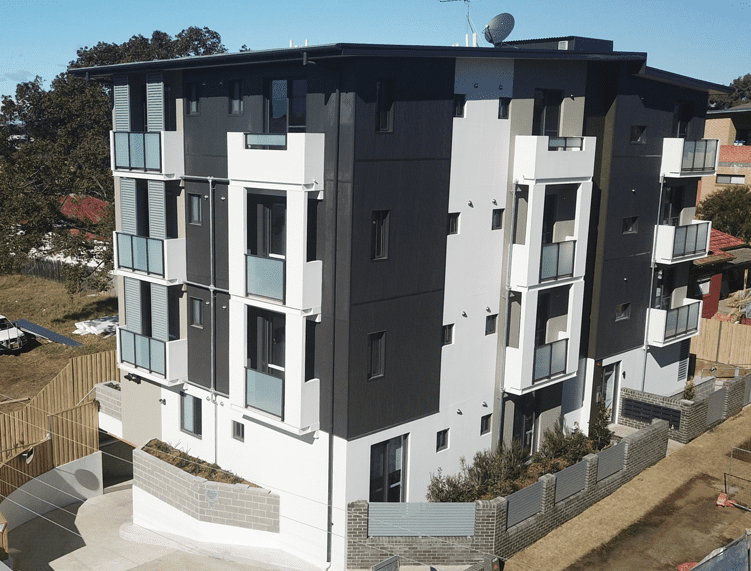
Introduction
Modular construction is transforming how buildings are designed, engineered, and constructed across Australia. For architects, understanding the principles, constraints, and opportunities of modular systems is essential to creating designs that are not only aesthetically compelling but also buildable, cost-effective, and compliant with the National Construction Code (NCC).
This comprehensive guide walks architects through the technical and regulatory foundations of modular construction, from module dimensions and transport constraints to NCC compliance pathways and design-for-manufacture principles. Whether you’re designing a multi-storey residential complex, a commercial office building, or an institutional facility, this resource will help you bridge the gap between architectural vision and manufacturing reality.
1. Module Dimensions and Transport Constraints: Designing Within Physical Reality
The starting point for any modular design is understanding the physical constraints that govern modules from the factory to the site. Transport networks across Australia—roads, rail, and sea routes—define the maximum dimensions that modules can achieve without special permits, police escorts, or route planning that adds significant cost and complexity.
Standard Module Envelope
The industry standard module is 3.5 metres wide × 12.5 metres long × 3.4 metres high (internal floor-to-floor). This envelope reflects:
- Road transport limits: Australian heavy vehicle regulations allow 3.5m width for standard routes without over-dimension permits. Anything wider requires special approval, adds 4–8 weeks to project timelines, and increases transport costs 30–50%.
- Ceiling height: The 3.4m internal height accommodates standard 2.7m floor-to-floor plus structural depth and mechanical services without exceeding transport limits.
- Length constraints: 12.5m is the sweet spot for rigid modules on Australian roads. Longer modules may require articulated handling or separate support beams, complicating logistics.
Oversize Options and When to Consider Them
EcoPrestige and other manufacturers can produce modules up to 4.2 metres wide, but this decision has profound cost and schedule implications:
- 4.2m width: Requires over-dimension permits, specialized heavy vehicle transport, route surveys, and council approvals. Transport cost typically 2–3× higher than standard. Project timeline extends by 6–12 weeks.
- Best-use scenario: High-density residential or office where the extra floor area (0.7m per module) translates to 8–12% more rentable space per storey. For lower-density applications, standard 3.5m width is more economical.
Architect takeaway: Early discussions with your modular supplier about transport options are critical. A design that assumes 4.2m width late in schematic design can derail timelines and budgets. Standard 3.5m width should be the default assumption unless the project economics strongly favour oversize modules. Learn more about modular buildings for builders.
2. Structural Systems: Steel vs. Lightweight—Implications for Design
Modular construction uses two primary structural strategies, each with distinct architectural implications, cost profiles, and regulatory pathways.
Structural Steel Modules
Structural frame: Hot-rolled or welded steel columns, beams, and bracing provide the primary load path. Modules are designed as three-dimensional frames capable of spanning and stacking.
- Multi-storey capability: Steel modules routinely stack 4–8 storeys. Some projects have achieved 12+ storeys with specialist engineering. Ideal for commercial, mixed-use, and high-density residential.
- Architectural freedom: Large clear spans (6–9m) allow open-plan office layouts. Facade systems can be fully independent of the structural frame.
- Connection design: Modules bolt or weld together on-site at four corner columns. Connections must be designed to handle in-transport loads, stacking loads, and final working loads.
- Cost: Higher material and fabrication cost per module, but economies of scale across multi-storey designs.
Lightweight Systems (Timber or Hybrid)
Structural frame: LVL, solid timber, or engineered timber members, sometimes combined with steel connections. Lighter overall, often suitable for low-rise residential (1–3 storeys).
- Stacking limits: Typically limited to 2–4 storeys depending on timber grade and module size.
- Aesthetic advantage: Exposed timber elements can enhance architectural character; thermal mass can improve building performance.
- Compliance pathways: Timber framed modules often use Deemed-to-Satisfy (DTS) pathways under NCC, reducing engineering complexity compared to steel.
- Cost: Generally lower per-module cost, making lightweight systems attractive for single-storey or low-rise projects in regional areas.
Architect takeaway: Choose your structural system early—it drives layout, span capability, storey count, facade options, and cost. Steel is the choice for dense urban mixed-use; lightweight timber suits regional residential and lower-rise institutional work.
3. Design-for-Manufacture (DfMA) Principles: Translating Architectural Intent into Factory Production
The core difference between modular and traditional construction is that every architectural decision must account for factory constraints and logistics. DfMA is the discipline that bridges design and manufacturing reality.
Grid Planning and Modular Coordination
Successful modular architecture begins with a grid system that organizes the layout into module-sized increments:
- Typical grids: 3.5m wide (matching transport width) × 6m or 12.5m long (half or full module). This grid defines column lines, window spacing, and service routing.
- Why it matters: A design that requires modules of varying widths or unusual proportions will encounter fabrication delays, cost premiums, and quality issues.
- Facade implications: Windows, doors, and cladding panels should align with the grid. A window that straddles a module boundary complicates both factory assembly and site assembly.
Service Zones and Routing
Mechanical, electrical, and plumbing services must be designed into the modules during fabrication, not added on-site:
- Vertical service shafts: Typically located at module corners or edges. Plan these early—moving a shaft late in design can trigger redesign across multiple modules.
- Horizontal routes: Ceiling voids (typically 500–800mm) accommodate ducts, conduits, and pipes. Coordinate structural depth with service depth.
- Coordination drawings: Before modules are fabricated, the architect, engineer, and MEP designer must produce fully coordinated 3D models showing every major service route. Clashes caught in the factory cost hours; clashes found on-site can halt work.
Connection Points and Tolerances
Module-to-module and module-to-foundation connections are the critical interfaces where architectural design meets manufacturing reality:
- Bolt patterns: Typically at four corner columns. Patterns must be identical across all modules in a given storey, or custom brackets are required for each junction.
- Tolerances: Factory-built modules are typically within ±10–15mm. Site-built structures may have ±50mm tolerances. The architect and engineer must detail connections that accommodate this variability.
- Levelling systems: Adjustable base plates or shimming is standard. Design must allow for minor settlement or site foundation variations.
Architect takeaway: DfMA is not a constraint to fight—it’s a design discipline that, when embraced, accelerates project delivery and improves cost certainty. Work closely with your modular supplier during schematic design to validate your grid, service routes, and connection assumptions.
4. National Construction Code (NCC) Compliance: What Architects Must Specify
The NCC, Volume One, establishes performance requirements that modular buildings must satisfy. Architects play a crucial role in specifying compliance pathways and documenting how the design achieves NCC objectives.
Building Classes and Modular Suitability
Not all building classes are equally suited to modular construction. Here’s what architects need to know:
Class 2 (Multi-Storey Residential)
- Suitability: Excellent. Repetitive module designs across 4–12 storeys. NCC compliance is straightforward via steel or timber DTS pathways.
- Key considerations: Fire separation between units, acoustic performance, and adequate stairwell/lift design.
- Typical approach: Steel modules with concrete infill or timber-frame modules with fire-rated linings.
Class 3 (Multi-Storey Accommodation)
- Suitability: Very good. Hotels, hostels, and student housing. Similar fire and acoustic requirements as Class 2.
- Key consideration: Common areas (lobbies, corridors, function rooms) may be larger than standard modules, often requiring on-site construction or large oversize modules.
Class 6 (Shops, Offices, Restaurants)
- Suitability: Excellent. Open-plan flexibility, standard structural grids. Modular construction shines here.
- Key consideration: Facade systems, access, and egress routes must be carefully detailed.
Class 7 (Carparks)
- Suitability: Good but specialized. Post-tensioned concrete planks or steel frame with concrete fill common. Some manufacturers specialize in modular carpark designs.
Class 9a (Hospital/Medical Facility)
- Suitability: Moderate. Highly specialized layouts, strict infection control zoning, and MEP complexity can challenge modular efficiency. Works best for ward towers or standardized clinic modules.
Class 9b (Office-Based Aged Care, Mental Health)
- Suitability: Good. Similar to Class 3 but with additional accessibility and support service requirements.
Class 9c (Kindergarten, School)
- Suitability: Good. Modular classrooms and administrative blocks are increasingly common. Play areas and gymnasiums may require bespoke design.
Key NCC Compliance Pathways for Modular Buildings
Performance-based (A5.2) Evidence of Suitability
Modular buildings often cannot satisfy all NCC Deemed-to-Satisfy (DTS) Provisions due to design uniqueness or manufacturing constraints. In these cases, Performance Solutions provide an alternative: Review our detailed Evidence of Suitability guide for architects.
- What it is: Documented evidence (test reports, engineering analysis, reference buildings) showing that the design achieves NCC Performance Requirements despite not following DTS rules.
- Architect’s role: Identify where your design deviates from DTS (e.g., large open-plan floor with limited structural walls) and work with the engineer and supplier to gather evidence of suitability.
- Timeline impact: A5.2 submissions require 2–4 weeks for building surveyor review. Start early.
- Examples: Fire separation in a large modular office module, acoustic performance of a repeating residential layout, or structural adequacy of non-standard connections.
Deemed-to-Satisfy (DTS) Compliance
Where possible, design to DTS provisions to avoid the need for A5.2:
- Standard storey heights and floor-to-floor dimensions
- Repetitive structural grids
- Standard fire ratings and separation walls
- Building envelope and acoustic systems with known performance
Architect takeaway: Early coordination with a building surveyor and your modular supplier is essential. Confirm which NCC provisions your design must satisfy via A5.2 and budget additional time and cost for evidence gathering.
5. Evidence of Suitability (NCC A5.2) Pathway: The Architect’s Role
When your modular design cannot satisfy DTS provisions, the architect is a key player in securing A5.2 approval. Here’s what you need to understand:
What Evidence of Suitability Covers
Common scenarios requiring A5.2 in modular buildings:
- Fire separation: Large open-plan spaces, unusual module layouts, or facade systems that deviate from standard constructions.
- Structural: Stacking heights beyond typical limits, unusual connection details, or non-standard column grids.
- Acoustic: Shared walls in multi-unit modules, large mechanical spaces, or facade performance claims.
- Building envelope: Novel facade systems, thermal performance claims, or air-tightness specifications.
Architect’s Responsibilities
- Identification: Work with your structural and services engineers to identify every deviation from DTS.
- Documentation: Prepare a schedule of Performance Requirements that the design must satisfy and explain why DTS is not achievable.
- Evidence coordination: Compile test reports (fire, acoustic, structural) and reference buildings demonstrating that the proposed solution works.
- Submission: The engineer or architect typically submits A5.2 documentation to the building surveyor before construction consent.
Timeline and Cost
- Preparation: 2–3 weeks to compile evidence and prepare documentation.
- Building surveyor review: 2–4 weeks typical. Some surveyors request additional evidence or independent review (expert determination).
- Cost: €200–€1,000+ depending on complexity. Budget for structural engineer time, testing fees, and surveyor review.
Architect takeaway: Don’t assume your design will achieve DTS approval. Early consultation with your building surveyor and modular supplier saves time and cost. If A5.2 is needed, start the evidence-gathering process immediately after schematic design.
6. Facade Flexibility: Expressing Architectural Character in Modular Buildings
One of the most common misconceptions about modular construction is that facades are predetermined and inflexible. In reality, modular buildings offer significant facade freedom—if designed thoughtfully.
Facade Systems and Cladding Options
Facades can be applied in multiple ways:
Factory-Applied Cladding
- Benefit: Quality controlled, fully installed in the factory, reduces on-site risk.
- Materials: Brick veneer, metal cladding, timber, fibre cement boards, or composite panels.
- Constraint: Must fit within the 3.5m transport width and survive transport stresses. Full-height brick veneer on wide modules may require temporary bracing during transport.
- Best practice: Apply partial cladding in the factory (e.g., base and columns) and complete it on-site (e.g., spandrel panels).
Site-Applied Cladding
- Benefit: Maximum design flexibility. No transport constraints.
- Approach: Modules exit the factory with a substrate (weather-tight wrapping or temporary cladding), and permanent cladding is applied on-site after stacking.
- Timeline: Adds 2–4 weeks to site work. Coordination with structural completion is essential.
Window and Door Configurations
- Factory-installed windows: Typical and recommended. Sealed, tested, and secured in the factory. Significantly faster on-site.
- Modular window grids: Design windows to align with structural and cladding grids. Avoid windows that straddle module boundaries unless absolutely necessary (adds cost and complexity).
- Corner modules: Often feature corner glazing or special window treatments. Coordinate with structural engineer—corner columns require special detailing.
- Operable windows: Possible but constrain module width. Large casement or awning windows reduce floor area if modules are already tight at 3.5m.
Roof Forms and Parapet Design
- Flat roofs: Standard and economical. Roof deck typically installed on-site or in final modules.
- Pitched roofs: Require careful design to stack modules. Gable roof modules (each stacked differently) are complex and expensive. Consider mono-pitch or single-slope roofs for easier stacking.
- Parapets: Can be built into modules (factory-applied) or added on-site. On-site parapets offer more design flexibility but add time.
- Setbacks and terraces: Possible if supported by the structural grid. Don’t rely on cantilevers beyond typical limits (typically 1–2m).
Architect takeaway: Facade expression is achievable in modular design, but requires early coordination with the manufacturer. Align windows with grids, confirm cladding logistics, and design roof forms that stack efficiently. Work with your supplier during design development to validate facade feasibility and cost.
7. Multi-Storey Stacking: Designing for 4–8 Storey Modular Buildings
Stacking modules vertically transforms a row of boxes into a multi-storey building. However, stacking introduces structural, logistical, and design challenges that architects must understand.
Structural Stacking Logic
- Steel modules: Designed as complete three-dimensional frames capable of supporting live loads and dead loads of modules above. Columns transfer loads through internal connection plates or bolted base plates.
- Timber modules: Often require engineered connections or timber posts aligned through multiple storeys. Some timber suppliers use steel edge beams to facilitate stacking.
- Typical limits: Steel systems routinely achieve 8+ storeys. Timber systems typically max at 3–4 storeys without specialist design.
Connection Design and On-Site Assembly
- Module-to-module connections: Typically bolted at four corner columns. Bolts may be tightened on-site or pre-installed and tightened after all modules are in place.
- Module-to-foundation: Cast-in connection plates or adjustable base plates secure modules to the slab or footing.
- Timing: Modules are positioned (typically with cranes), rough-levelled, and allowed to sit for a period before final connection work. This allows the building structure to settle.
- Inspection points: Building surveyor inspections occur at connection stages, typically after each storey is complete.
Storey Heights and Elevational Expression
- Standard floor-to-floor: 3.4m internal is typical, accommodating 2.7m ceiling plus structural and services depth.
- Variation: Ground floor can be higher (4.5–5m) to create double-height lobbies or large retail spaces. Upper storeys maintain 3.4m standard. Mixing floor heights requires custom modules and adds cost.
- Facade rhythm: Repetitive storey heights can look monotonous. Break up the facade with material changes, recessed balconies, or banding (horizontal lines of contrasting cladding).
Bracing and Lateral Load Resistance
- Lateral loads: Wind and seismic forces must be transferred through the module frame to the foundation.
- Bracing strategies: X-bracing (diagonal steel members), shear walls (solid walls or infill panels), or moment-resisting connections. The choice affects both structural cost and architectural appearance.
- Architect’s role: Understand where bracing is located (often at core or perimeter) so you can design around it or express it architecturally.
Architect takeaway: Multi-storey modular design is fully feasible but requires careful coordination of structural, connection, and facade systems. Early engagement with your structural engineer and modular supplier is critical. Understand your connection details, bracing locations, and tolerance expectations.
8. Services Coordination: The Architect-Engineer-Supplier Triangle
In modular construction, mechanical, electrical, and plumbing (MEP) systems are largely pre-fabricated and pre-installed in the modules. This demands unprecedented coordination between architect, structural engineer, MEP designer, and the modular supplier.
Pre-Fabrication vs. On-Site Installation
In-Module Services
- What’s pre-installed: Lighting, power circuits, HVAC rough-in (ducts and major runs), plumbing trunk lines, fire safety systems (sprinklers, detectors), and some specialised equipment.
- Why it matters: Services pre-installed in the factory can be tested, commissioned, and verified before the module leaves. Quality is higher and on-site time is reduced.
- Constraint: Every service must be designed and routed before the module enters the factory. Changes on-site are expensive and disruptive.
Inter-Module Connections
- What happens on-site: Modules are connected to each other and to central systems via flexible conduits, connection fittings, and temporary support.
- Coordination challenge: All service routes between modules must be detailed in advance. The architect’s coordination drawings must show exactly how services pass from one module to the next.
Service Zones and Architectural Integration
Vertical Service Shafts
- Location: Typically at module edges or corners, integrated into the structural frame. Eliminates the need for services to run through occupied spaces.
- Design: Shaft dimensions typically 1.5m × 1.5m to 2m × 2m, accommodating multiple duct sizes, switchboards, and maintenance access.
- Architectural expression: Shafts can be exposed (as a design feature) or concealed behind mechanical rooms and core walls.
Ceiling Void Coordination
- Typical depth: 600–800mm ceiling void above finished ceiling allows ducts, pipes, and conduits to run horizontally.
- Module-to-module: Voids must align where modules join. Misaligned voids require on-site ductwork modifications, adding cost and time.
- Suspended ceiling: Allows flexibility but adds cost. Open soffit (exposed ductwork and structure) saves cost and floor height but limits architectural finishes.
Coordination Drawings and 3D Models
- Before fabrication: The team must produce fully coordinated 3D BIM (Building Information Model) showing structure, MEP, and all major clashes resolved.
- Clash detection: Structural columns vs. ductwork, pipes vs. electrical conduit—all must be checked and resolved in the model, not on-site.
- Module-level detail: Each module must have a corresponding MEP coordination drawing showing service routes, connection points, and rough-in dimensions.
MEP Testing and Commissioning
- Factory testing: HVAC systems are tested for leakage and performance. Plumbing is pressure-tested. Electrical is continuity-checked.
- Site commissioning: After modules are stacked and connected, systems are commissioned (balanced, calibrated, fine-tuned) on-site.
- Efficiency gain: Factory testing catches defects early. Site commissioning is typically faster than traditional buildings because the systems are already installed.
Architect takeaway: Treat MEP coordination as integral to architectural design from day one. Involve your MEP consultant in schematic design. Provide the modular supplier with coordination drawings showing service routes and connection points. Coordinate ceiling heights with MEP depth requirements. A well-coordinated MEP design accelerates site work and reduces cost overruns.
9. Common Architectural Mistakes with Modular Construction
Learning from others’ missteps can save months and significant cost. Here are the pitfalls architects often encounter in modular projects:
Mistake 1: Assuming Design Flexibility Late in the Project
The problem: A design that deviates from the standard module envelope or grid is approved in schematic design, then discovered to be unfeasible during detailed design. Changing the grid or module count late can derail a timeline.
Solution: Validate your grid, module count, and overall dimensions with your supplier in schematic design. Don’t wait until construction documents.
Mistake 2: Over-Specifying Non-Standard Modules
The problem: Designing unique modules for each zone (corner modules, edge modules, special modules) drives up costs 30–50% and adds weeks to fabrication.
Solution: Maximize repetition. Standardize module dimensions, connections, and service routes across the building. Save custom design for critical areas only.
Mistake 3: Inadequate Service Coordination
The problem: MEP systems are designed by consultants in isolation, without coordinating with the structural grid or module dimensions. Result: clashes discovered during fabrication or on-site require expensive redesign.
Solution: Involve MEP consultants from day one. Produce coordinated 3D models before any fabrication begins. Require clash detection reports from the BIM coordinator.
Mistake 4: Underestimating Facade Complexity
The problem: Facade design is treated as cosmetic, with changes requested late in the project. Custom cladding details, non-standard window grids, or complex corner details drive cost and delay.
Solution: Integrate facade design with structural and module design. Align windows with the module grid. Confirm cladding logistics (factory-applied vs. site-applied) early with the supplier.
Mistake 5: Ignoring Transport Constraints
The problem: A design assumes 4.2m-wide modules without confirming that over-dimension transport is budgeted and scheduled. Project delay occurs when permits are denied or routes must be surveyed.
Solution: Default to 3.5m width (standard transport). If oversize is needed, confirm transport logistics, cost, and timeline with the supplier and project transport coordinator.
Mistake 6: Ambiguous NCC Compliance Planning
The problem: Design proceeds without clarifying which NCC provisions are satisfied via DTS and which require A5.2. Evidence gathering is rushed late in design, delaying building surveyor approval.
Solution: Early consultation with your building surveyor and engineer to identify A5.2 requirements. Start evidence gathering in design development, not late in detailed design.
Mistake 7: No Contingency for On-Site Variability
The problem: Connection details are designed to ±5mm tolerances, but site foundations are ±50mm. Modules don’t align; expensive on-site modifications or levelling adjustments are required.
Solution: Design connections with adjustment capability (shimming plates, adjustable base plates). Confirm site tolerance expectations with the supplier and engineer.
Mistake 8: Poor Documentation of Maintenance Access
The problem: The building is completed, but maintenance access to roof, mechanical spaces, and service routes is difficult or unsafe. Future operations become costly.
Solution: During design, confirm maintenance access paths, handholds, and service access points. Document these in the operating manual.
10. Working with EcoPrestige: Scope Split, Design Review, and the Shop Drawing Process
EcoPrestige is a full-service modular construction partner, from initial concept through on-site assembly. Here’s how architects typically engage with EcoPrestige during a project.
Scope Split: Who Does What?
Architect’s Scope
- Concept and schematic design of the building envelope and spatial layout
- Facade expression and material selection (in consultation with EcoPrestige)
- Coordination with structural engineer and MEP consultants
- Building consent documentation (drawings, specifications, A5.2 evidence if needed)
- Site supervision during assembly and construction
EcoPrestige’s Scope
- Detailed engineering of the modular structure (modules, connections, bracing)
- Module layout optimization (maximizing repetition, minimizing cost)
- Factory fabrication and quality assurance
- Transport coordination and logistics
- On-site supervision during unloading, placement, and connection
- Commissioning support and defects rectification
Shared Responsibilities
- Design review workshops during schematic and design development phases
- Coordination of MEP rough-in locations and service routes
- NCC compliance pathways and evidence of suitability if required
- Value engineering and cost optimization
Design Review Process
EcoPrestige typically engages with architects through staged design reviews:
Stage 1: Concept Review (Schematic Design)
- What to bring: Preliminary site plans, elevations, floor plans, spatial diagrams, and preliminary module layout sketches.
- EcoPrestige feedback: Module envelope feasibility, transport constraints, preliminary cost estimate, and recommendations for grid optimization.
- Outcome: Validated module layout, agreed-upon dimensions, and preliminary structural approach.
Stage 2: Design Coordination (Design Development)
- What to bring: Detailed floor plans (with grid), elevations, structural layout, MEP coordination drawings (rough-in locations), facade details, and connection sketches.
- EcoPrestige input: Detailed module breakdown, preliminary structural design, connection details, and identification of any DTS/A5.2 issues.
- Outcome: Coordinated architectural and engineering design, confirmed module breakdown, and preliminary cost and schedule.
Stage 3: Technical Review (Construction Documents)
- What to bring: Final architectural and engineering documents, detailed specifications, and coordination drawings with all clashes resolved.
- EcoPrestige deliverables: Preliminary shop drawings and construction schedule, factored into any final cost or timeline adjustments.
- Outcome: Design-ready documents suitable for building consent and ready-to-fabricate shop drawings.
Shop Drawings and Fabrication
After building consent is obtained, EcoPrestige produces shop drawings in coordination with your engineer and any consultants:
Shop Drawing Content
- Module elevation and section: Every module shown at 1:50 or 1:100 with full dimensions, connection details, and fabrication notes.
- Structural details: Column footprints, bolt patterns, shear wall locations, bracing configuration.
- Service rough-in: MEP connection points, duct routes, service void dimensions, and connection sketches.
- Facade and finish: Cladding panels, window rough openings, sealant locations, and factory-applied finishes.
Review and Approval Cycle
- Submission: EcoPrestige submits preliminary shop drawings (typically 2–3 weeks before fabrication start).
- Architect and engineer review: 1 week to review, mark up discrepancies, and request changes.
- Revision cycle: EcoPrestige revises and resubmits. Typically 1–2 revision cycles before approval-for-fabrication.
- Timeline: Total 4–6 weeks from building consent to fabrication start.
Quality Assurance and Factory Inspection
During fabrication, the architect or project manager typically conducts factory inspections:
- First inspection: After frame assembly, before MEP rough-in. Verify column alignment, connection quality, and any structural anomalies.
- Pre-dispatch inspection: Before modules leave the factory. Verify finish, cladding quality, window installation, and service rough-in completeness.
- On-site inspection: After delivery, verify transport did not cause damage. After assembly, inspect connections and overall fit.
Communication Best Practices
- Early engagement: Brief EcoPrestige on your design intent and spatial requirements before detailed design. This helps them identify feasibility issues early.
- Clear documentation: Provide coordination drawings, specifications, and sketches that are clear and detailed. Ambiguity on paper becomes cost and delay on-site.
- Regular touchpoints: Monthly or bi-weekly coordination meetings during design and fabrication keep the project aligned.
- Change management: Any design changes after schematic design should be evaluated for cost and schedule impact. Document change requests formally.
Architect takeaway: EcoPrestige is most effective when architects treat them as early partners, not late-stage contractors. Early design collaboration, clear coordination, and regular communication ensure that your architectural vision is translated efficiently into buildable modules.
Conclusion
Modular construction offers architects a powerful toolset for designing efficient, cost-effective, and high-quality buildings. Success requires understanding the technical constraints (module dimensions, transport limits, structural systems), embracing design-for-manufacture principles (grid planning, service coordination, connection design), and navigating NCC compliance pathways (DTS vs. A5.2).
By engaging with modular suppliers like EcoPrestige early, coordinating closely with structural and MEP consultants, and designing with modularity in mind, architects can unlock the speed, cost certainty, and quality benefits that modular construction delivers.
Your next modular project awaits—start with a clear grid, validate your scope with your supplier, and coordinate everything in a shared 3D model before a single module enters the factory. Ready to discuss your project? Contact EcoPrestige to start your modular journey.