
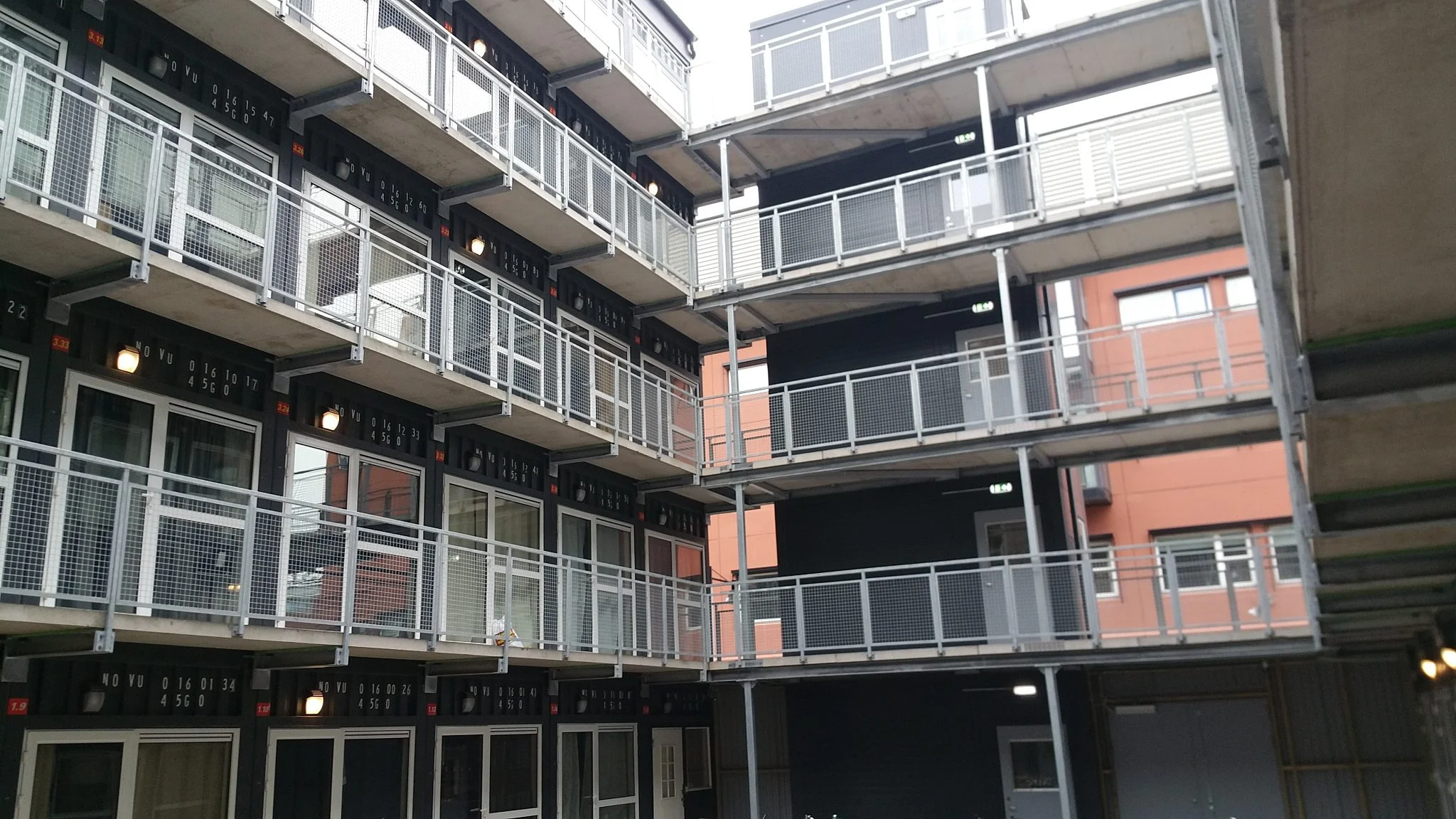
Modular Construction in South Australia: Why SA Builders Are Turning to Structural Steel Systems
South Australia is experiencing a construction delivery gap that is widening every quarter. Labour shortages across Adelaide and regional SA, combined with rising material costs and tightening programme deadlines, are forcing builders and developers to rethink how they deliver commercial and institutional buildings.
Modular construction — specifically structural steel volumetric systems manufactured offshore under Australian engineering oversight — is emerging as the credible alternative for SA projects that need cost certainty, programme compression, and NCC compliance without the risks of traditional on-site delivery.
This guide covers what South Australian builders and developers need to know about modular construction in 2026: costs, timelines, compliance, sectors, and how to evaluate a modular supplier for SA projects.
What Is Structural Steel Modular Construction?
Structural steel modular construction involves manufacturing complete building modules — steel-framed, fully enclosed, internally fitted — in a controlled factory environment. These modules are then shipped to site and craned into position on prepared foundations.
Unlike lightweight or timber-framed prefab, structural steel modules are engineered to meet Australian standards for multi-storey stacking (up to 4–8 storeys), cyclone and wind loading, fire separation, and acoustic performance across NCC Building Classes 1a, 2, 3, 5, 6, 7, 9a, 9b, and 9c.
EcoPrestige operates as a builder-facing modular systems supplier — not a head contractor. We supply the structural steel modules, coordinate engineering and QA, manage offshore manufacturing, and deliver to site. The registered builder retains full control of the building contract, site works, foundations, services connections, and commissioning.
This scope split is critical for SA builders: you maintain your builder registration obligations and client relationship while accessing a modular supply chain that compresses your programme and locks your costs.
South Australia’s Construction Delivery Challenge
SA faces a specific set of pressures that make modular construction particularly relevant:
Labour constraints: Adelaide’s construction workforce is stretched across residential, infrastructure, and commercial sectors. Regional SA — including the Barossa, Limestone Coast, Fleurieu Peninsula, Yorke Peninsula, and the Upper Spencer Gulf — faces acute shortages of skilled trades, particularly for commercial-grade fitout.
Regional delivery logistics: Many high-value SA projects are in locations where mobilising a full construction team is expensive and programme-destroying. Modular reduces on-site labour requirements by 60–70%, with modules arriving substantially complete.
Government investment pipeline: South Australia’s investment in childcare, education, social housing, and aged care infrastructure is creating demand for buildings that can be delivered within single budget cycles — typically 12–18 months from funding approval to practical completion. Traditional construction rarely achieves this.
Tourism and accommodation demand: SA’s wine regions, coastal areas, and outback tourism corridors need accommodation infrastructure that can be delivered quickly without disrupting the existing tourism operation during peak seasons.
Cost Benchmarks for Modular Construction in South Australia
EcoPrestige supply-only pricing for structural steel modular systems in 2026:
Accommodation modules (holiday parks, motels, workforce): $2,000–$3,200/m² supply-only, depending on specification level and module size. A standard 35m² motel room module typically falls in the $2,200–$2,800/m² range.
Childcare centres (NCC Class 9b): $2,300–$3,200/m² supply-only. A 600m² childcare centre (75-place) would typically cost $1.4M–$1.9M for modules supplied, versus $2.1M–$3.0M for equivalent traditional construction.
Education buildings (NCC Class 9b): $2,300–$3,500/m² supply-only. Includes classrooms, administration, amenities.
Aged care facilities (NCC Class 9c): $2,300–$3,800/m² supply-only. Higher specification due to accessibility, fire separation, and acoustic requirements.
Commercial buildings (NCC Class 5/6): $2,500–$3,800/m² supply-only.
These benchmarks represent the module supply component only. Total delivered cost includes foundations, site works, services connections, landscaping, and the builder’s margin — typically adding 35–50% to the supply-only figure. See our full modular construction costs guide for detailed breakdowns.
Programme Advantages for SA Projects
The primary commercial advantage of modular construction is programme compression. For South Australian projects:
Traditional programme: 12–24 months from design lock to practical completion for a typical commercial building (childcare centre, motel, school building).
Modular programme: 5–7 months from design lock to practical completion. This includes 8–12 weeks of manufacturing (running concurrently with foundation and site works), 2–4 weeks shipping, and 2–4 weeks on-site installation and commissioning.
For developers, this programme compression translates directly to earlier revenue generation, reduced holding costs, and lower financing exposure. For government-funded projects, it means delivery within a single budget cycle.
Sectors with Strongest Modular Demand in South Australia
Childcare and Early Learning Centres
South Australia’s childcare sector is growing, with demand for new centres across Adelaide’s northern and southern growth corridors, as well as regional centres like Mount Gambier, Murray Bridge, and Port Augusta. Modular childcare centres deliver NCC Class 9b compliance with 38-week programmes from design lock. See our childcare modular construction page and childcare cost and funding guide.
Education Buildings
SA schools need additional capacity, and modular classrooms can be manufactured and installed during school holidays to minimise disruption. Structural steel modules meet NCC Class 9b requirements for fire, structural, acoustic, and accessibility performance. Read our modular classrooms guide for procurement and compliance details.
Tourism Accommodation
The Barossa Valley, McLaren Vale, Fleurieu Peninsula, Kangaroo Island, and the Flinders Ranges all have accommodation capacity constraints. Modular cabins and motel rooms can be delivered and installed in weeks rather than months, allowing operators to add capacity between peak seasons. See our holiday park cabins guide and accommodation buildings page.
Aged Care
South Australia has an ageing population and growing demand for aged care beds. Modular aged care buildings (NCC Class 9c) deliver the fire separation, accessibility, and acoustic performance required, with programmes 50–60% shorter than traditional construction. See our aged care modular guide.
Social and Affordable Housing
The SA Housing Authority and community housing providers need scalable, repeatable housing solutions. Modular construction delivers NCC Class 1a and Class 2 dwellings at $150K–$210K per 1BR unit (supply-only) versus $220K–$310K traditional. See our social housing guide.
Workforce Accommodation
Mining operations in the Upper Spencer Gulf region (Whyalla, Port Augusta, Olympic Dam) and infrastructure projects across regional SA need workforce accommodation that can be deployed rapidly. Our structural steel modules are rated for regional wind loading and can be relocated if required.
NCC Compliance and Evidence of Suitability
Every modular building installed in South Australia must comply with the National Construction Code. The critical compliance pathway for modular buildings is Evidence of Suitability under NCC A5.2.
This requires documented evidence that the building solution meets all relevant Performance Requirements — typically through a combination of engineering certification (by registered Australian engineers), fire test reports, acoustic test reports, energy assessment, and accessibility compliance documentation.
EcoPrestige provides a complete Evidence of Suitability package with every project, including structural engineering certification by registered Australian engineers, fire engineering reports, and NCC compliance documentation. This package is designed to satisfy the requirements of SA’s building surveyors and certifiers.
For more detail on compliance, see our engineering and NCC compliance page and our quality assurance page.
How Delivery Works for South Australian Projects
Design lock (Week 0): Builder confirms module layouts, specifications, and engineering requirements. EcoPrestige provides shop drawings for approval.
Manufacturing (Weeks 1–12): Modules are manufactured in our controlled factory environment under Australian engineering oversight and QA inspection protocols.
Concurrent site works: While modules are being manufactured, the builder completes foundations, services rough-in, and any site preparation — running in parallel with manufacturing.
Shipping (Weeks 12–16): Modules are containerised and shipped to Adelaide or the nearest port to the project site.
Installation (Weeks 16–20): Modules are craned into position, connected to services, and commissioned. On-site works are typically 2–4 weeks for a standard project.
For regional SA projects, transport logistics from Adelaide port to site are coordinated as part of the delivery programme. See our how modular works page for the full process.
Key South Australia Locations for Modular Construction
Adelaide Metro: Northern growth corridors (Gawler, Playford, Salisbury), southern corridors (Morphett Vale, Aldinga, Seaford), western corridors (Port Adelaide, West Lakes).
Adelaide Hills and Barossa: Tourism accommodation, childcare, community facilities.
Fleurieu Peninsula and Kangaroo Island: Tourism accommodation, regional community buildings.
Limestone Coast (Mount Gambier, Naracoorte): Education, childcare, aged care, workforce accommodation.
Murray Bridge and the Riverland: Regional community facilities, accommodation, social housing.
Upper Spencer Gulf (Whyalla, Port Augusta, Port Pirie): Workforce accommodation, community infrastructure, mining support.
Yorke Peninsula and Eyre Peninsula: Tourism accommodation, remote community facilities.
Flinders Ranges and Outback: Remote tourism accommodation, ranger housing, community buildings.
How to Evaluate a Modular Supplier for SA Projects
South Australian builders considering modular supply should evaluate suppliers on six criteria:
1. Engineering credentials: Are structural and fire engineering certifications issued by registered Australian engineers? Non-Australian engineering is a compliance risk. Use our supplier evaluation checklist.
2. Evidence of Suitability package: Does the supplier provide complete NCC A5.2 documentation, or does the builder need to source this separately?
3. QA and inspection regime: What factory QA protocols are in place? Are inspections documented? Can the builder or their representative inspect during manufacturing?
4. Scope clarity: Is the supply-only scope clearly defined? What is included and excluded? Where does the supplier’s scope end and the builder’s scope begin?
5. Programme certainty: What programme guarantees does the supplier offer? What happens if manufacturing is delayed?
6. Track record: Has the supplier delivered projects of similar scale and specification? Can they provide references?
Frequently Asked Questions
How much does modular construction cost in South Australia?
EcoPrestige supply-only pricing for structural steel modular systems in SA ranges from $2,000–$3,800/m² depending on building type and specification. Accommodation modules start from $2,000/m², childcare centres from $2,300/m², and aged care from $2,300/m². Total delivered cost including foundations, site works and builder margin typically adds 35–50%.
How long does a modular building take to deliver in South Australia?
Typical programme from design lock to practical completion is 5–7 months. This includes 8–12 weeks manufacturing (concurrent with site works), 2–4 weeks shipping, and 2–4 weeks on-site installation — compared to 12–24 months traditional.
Does modular construction comply with South Australian building regulations?
Yes. All modular buildings must comply with the National Construction Code (NCC). EcoPrestige provides complete Evidence of Suitability documentation under NCC A5.2, including structural and fire engineering certification by registered Australian engineers.
Can modular buildings be delivered to regional South Australia?
Yes. Modules ship to Adelaide port and are transported to site. EcoPrestige coordinates delivery logistics for all SA locations including the Limestone Coast, Riverland, Upper Spencer Gulf, and outback sites.
What types of buildings can be built with modular construction in South Australia?
Structural steel modular systems deliver buildings across NCC Classes 1a, 2, 3, 5, 6, 7, 9a, 9b, and 9c — childcare, classrooms, aged care, motels, cabins, workforce accommodation, social housing, and commercial offices.
EcoPrestige Service Regions
EcoPrestige supplies structural steel modular systems across Australia and New Zealand: Victoria | Western Australia | Queensland | Northern Territory | Tasmania | New Zealand
Next Steps
If you are a South Australian builder or developer exploring modular construction for a commercial, institutional, or accommodation project, contact EcoPrestige to discuss your requirements. Download our project brochures for detailed specifications and case studies.