
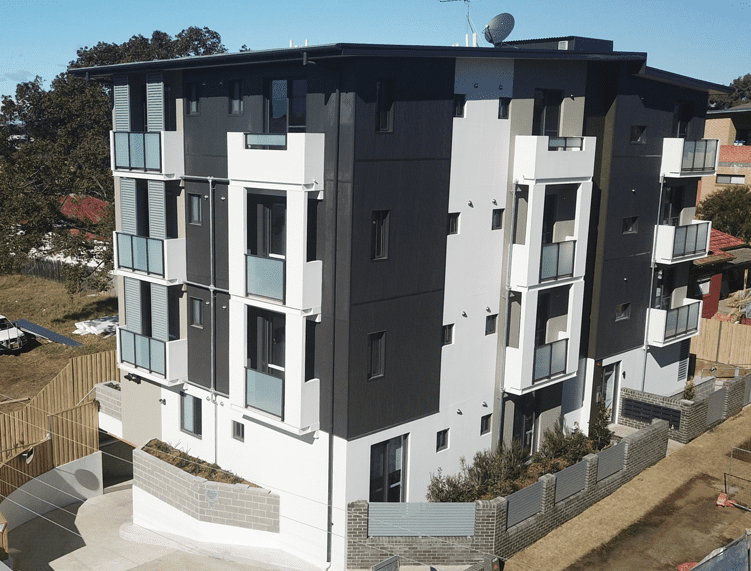
Choosing between modular and traditional construction isn’t about picking sides—it’s about understanding where each method performs best and making an informed decision for your specific project. For builders and developers evaluating construction approaches across regional Victoria, the comparison comes down to three primary dimensions: programme, cost, and risk.
Programme Comparison: Time Is Money
Traditional construction follows a sequential programme. Site preparation, then foundations, then structural frame, then building envelope, then internal services, then finishes. Each stage depends on the completion of the previous one. Weather delays at any stage cascade through the entire programme.
Modular construction compresses this sequence. Manufacturing and site preparation happen in parallel. By the time your site is ready, your building components are manufactured and quality-tested. On-site assembly then happens rapidly—weeks rather than months for the structural and envelope phases.
For a standard residential development, this means 30-40% programme compression. For commercial projects with complex fit-outs, the compression can be even greater.
Cost Comparison: Beyond the Per-Square-Metre Price
Direct construction cost per square metre for modular buildings is sometimes comparable to traditional construction. The real cost advantage emerges when you consider total project cost: carrying costs reduce when programme compresses, finance charges reduce when delivery accelerates, revenue starts earlier when buildings are occupied sooner.
For developers, this programme-driven cost advantage often exceeds any difference in direct construction cost. A two-month programme reduction on a $5 million project can save $80,000-$150,000 in carrying and finance costs alone.
Risk Comparison: Certainty vs Variability
Traditional construction carries inherent variability. Weather, trade availability, material delivery, subcontractor performance, and site conditions all introduce uncertainty. Modular construction reduces these variables by shifting the majority of construction into a controlled factory environment.
For builders and developers operating in regional Victoria, modular construction offers a risk profile that traditional methods cannot match. The question isn’t whether modular is better than traditional across all projects—it’s whether the specific characteristics of your project favour modular’s programme, cost, and risk advantages.
Related Pages
Commercial buildings · Multi-unit residential · Programme risk reduction · Geelong · Ballarat